


257 Years is a nine-part series on the history of wine in Southern California, from the Mission grape’s arrival in San Diego in 1769 to the region’s revival today. This is Part Four. Earlier posts are linked at the bottom.
A long one this week, with family photographs. If your email truncates, the full post is available on the website and in the app.

In 1942, my great-grandfather Thomas Tatton was a carpenter at the Padre Vineyard Company in Cucamonga.
He earned $1,140 that year. He worked forty hours a week, forty-four weeks. He had an eighth-grade education. He owned a modest home in San Bernardino County valued at $2,000. The U.S. Census recorded him as a carpenter at a winery, which is to say he was the man with the hammer. He built and maintained the structures where other men made wine.
The winery he worked at had been there since 1870. It held California Bonded Winery License No. 1. By the year my great-grandfather walked through its gates, it had survived Pierce’s disease, the early collapse of the Anaheim Colony, the rise of Cucamonga as the largest single wine-producing valley in California, and the thirteen dry years of Prohibition.
This story is about that valley. It is also about the family that founded the winery, the family that bought it back generations later, and one of the men in between who kept the buildings standing.
It is also about what disappeared. Most of the original vineyards are gone, paved over by the 10 freeway and the warehouses, distribution centers, and subdivisions that followed it. The Cucamonga wine country was buried, but not entirely. Some of it survived, some of it is coming back. And a thread of it runs through my own family.
Let me show you what I found.
The Valley That Looked Like Italy
The Cucamonga Valley sits at the foot of the San Gabriel Mountains, in what is now San Bernardino County. The land had cool foothill terraces, natural springs, and warm sandy soil with perfect drainage. To Italian immigrants arriving in the late nineteenth century, the views resembled those of the Piedmont region of their homeland. The hills rolling into the Alps, grapes ripening slowly, in the soft, warm light.
Word traveled back to the old country. Italian families began to arrive. Towns with Italian names emerged across the valley: Etiwanda, Fontana, Grapeland, Mira Loma, Wineville. One village would eventually be named after a single Italian immigrant: Guasti.
But the valley’s wine story didn’t start with the Italians. It started with a Californio adventurer who planted the first large vineyard in 1838, four years after the Mexican government secularized the missions and twenty-two years before any of the Italian families arrived.
The First Vineyards (1838)
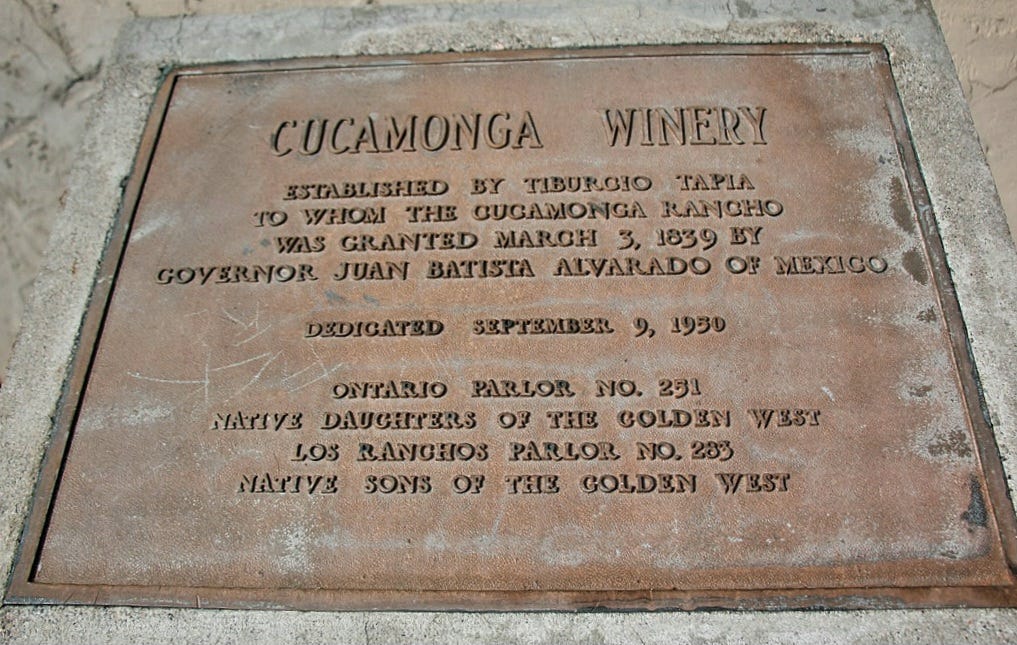
In 1838, Tiburcio Tapia planted the first large vineyard in present-day Rancho Cucamonga. Tapia was a soldier, privateer, smuggler, and politician. The kind of figure the Mexican period produced often, and the American period rarely.
The following year, on March 3, 1839, Governor Juan Bautista Alvarado granted Tapia 13,000 acres in the Cucamonga area. Tapia built his adobe on Red Hill and planted his vineyard to the east. The work was done by indigenous laborers, as was the case across Spanish and Mexican California. The same labor system that built San Gabriel, the Avila Adobe, and the missions.
Portions of that original 1838 operation, later known as Thomas Brothers Winery, still stand at the corner of Carnelian Avenue and Foothill Boulevard in Rancho Cucamonga. The sign reads California’s Oldest.
In 1859, John Rains planted a second large vineyard. By the late 1860s, he had 125,000 vines.
And in the late 1860s, the Sainsevain brothers arrived from Los Angeles. Pierre and Jean Louis, Vignes’s nephews, had taken over El Aliso in downtown LA and were now leaving the city as Pierce’s disease spread, urbanization claimed vineyards, and the industry was pushed east. Jean Louis became the winery superintendent at the Tapia property. Pierre imported French cuttings and planted new varieties in Etiwanda.
The Sainsevains literally connect Part Three and Part Four. They are the same family that founded the LA wine industry, now planting in Cucamonga.
In 1869, the San Francisco Times wrote of Cucamonga wine: “It is known as Cocomungo, or California Madeira wine, and is pronounced by competent judges to be as fine an article as manufactured in the world.”
Cucamonga had arrived.
The Vaché Family
In 1832, a French family arrived in Monterey. Theophile Vaché had come with his three nephews, Adolphe, Émile, and Theophile II, seeking relief from the Napoleonic wars rolling across Europe. They planted vineyards in the Monterey area. Within a few decades, they had decided their fortunes lay in Southern California, in the valleys at the foot of the San Gabriel Mountains.
The Vachés brought their vines to the banks of small rivers in the San Gabriel and Cucamonga Valleys. In 1870, they founded the Padre Vineyard Company on 8th Street in what is now Rancho Cucamonga, positioned across from the railroad tracks for easy shipping. The site featured grand stone buildings and expansive underground cellars built to produce and age sparkling wines, ports, and brandies.
The operation grew. It eventually held California Bonded Winery License No. 1, the first commercial winery formally registered under the modern federal framework. That license number was not symbolic. It was structural. Padre Vineyard Company was the first.
In 1892, a young Frenchman named Marius Biane arrived in Cucamonga and was hired by the Vachés. He met Marceline Vaché, daughter of Adolphe, and married her. Marius and Marceline together extended the Brookside vineyards across the valley, raising two sons, Philo and François, who would themselves become part of one of the longest continuous winemaking lineages in California.
Secondo Guasti and the Italian Vineyard Company
The man whose name became the town’s was born in Piedmont, Italy, in 1859.
Secondo Guasti emigrated to California as a young man and made his way to Cucamonga. He stood at the foot of the San Gabriel Mountains and watched floodwater coming out of the canyons. “Surely, I thought, this is heaven’s doorstep,” he later said.
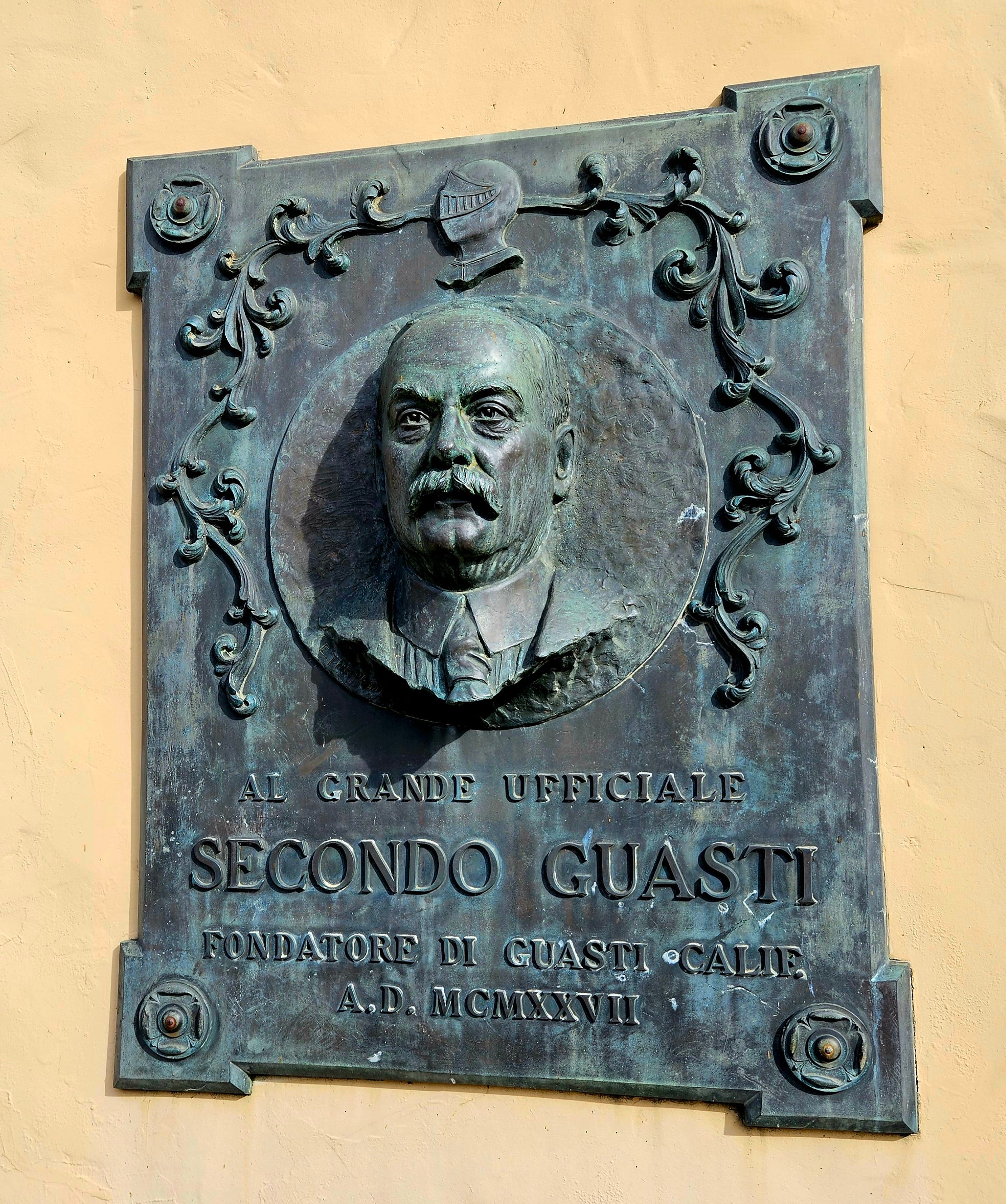
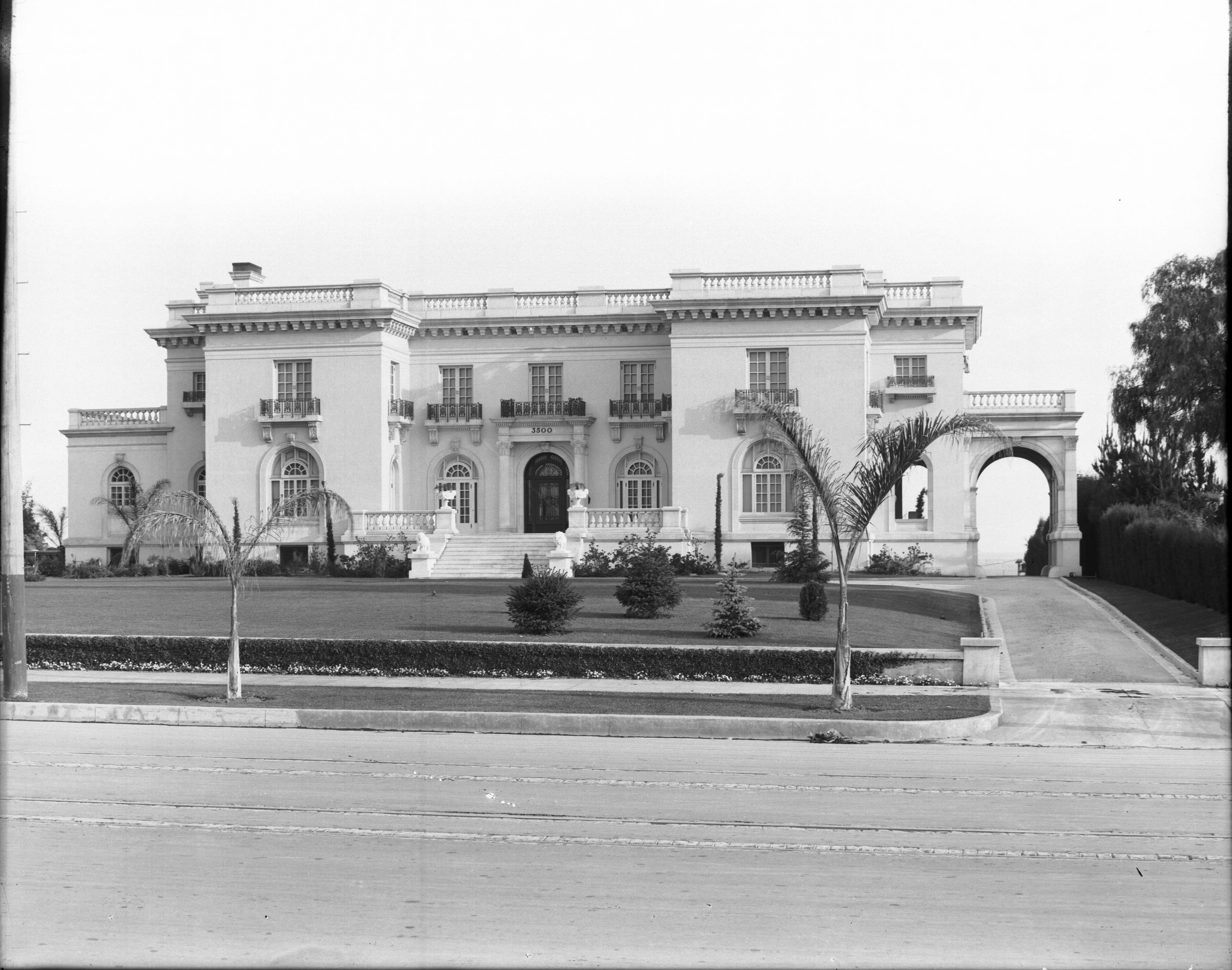
In 1883, he founded the Italian Vineyard Company. By 1917, the IVC advertised five thousand acres of contiguous vineyard, which the company claimed was the largest single vineyard in the world. It was probably true. At this point, Cucamonga had no rival.
By 1916, more than twenty thousand acres of vineyards were under cultivation in the Cucamonga Valley, well beyond the acreage of Sonoma and Napa counties combined.
Guasti died in 1927, four years before the dry years would have ended. The town he founded in 1904 still exists. You can drive there. The IVC office still stands, alongside the San Secondo d’Asti Catholic Church that he built for his workers.
He was not the only figure of the era. The Hofer family established the Cucamonga Pioneer Vineyard Winery in 1882, running an association of eleven other growers that covered four thousand acres. George F. Johnston in Etiwanda helped establish the commercial viability of Thompson Seedless grapes. The Gallo brothers also operated in the valley. And the Vaché-Biane family was building Brookside.
By the early twentieth century, Cucamonga was not just a wine region. It was an industrial wine economy operating on an international scale.
Then came January 17, 1920.
Prohibition and the Padres Elixir
On January 17, 1920, the Volstead Act took effect. The manufacture, sale, and transportation of intoxicating liquors became illegal in the United States. Most of the country’s commercial wineries closed.
The Vai brothers did not close.
James and Giovanni Vai, Italian immigrants who had acquired the Padre Vineyard Company in 1909, were not the kind of operators who accepted closure as an outcome. They studied the loopholes. The Volstead Act permitted home production of up to 200 gallons of wine per family per year. It permitted sacramental wine. It permitted cooking wine. And, most importantly for the Vai brothers, it permitted medicinal alcohol to be sold by prescription through pharmacies.
The brothers created Padres Wine Elixir.
A May 29, 1929, advertisement in the Los Angeles Evening Express showed a stern-looking man in a suit and stethoscope. The copy read:
“Your Doctor Recommends PADRES WINE ELIXIR for general run-down condition, convalescence, impaired digestion, and spring fever. Medical authorities everywhere recognize the body-building, health-giving qualities of the phosphates and proteins contained in exact proportions in Padres Wine Elixir.”
It was, of course, wine. Sold as a tonic. The Vai brothers were running one of the most successful Prohibition workarounds in the country.
A separate advertisement in the Santa Ana Register recounted the product’s laboratory certification. A chemist named R.H. Pinker had secured a sample at the company’s warehouse at 845 North Alameda Street in Los Angeles, the same Alameda Street where Jean-Louis Vignes had planted his vineyard a hundred years earlier. The chemist’s letter read: “We have examined a sample... and find it to be free from Strychnine.”
That was the standard the Vai brothers’ product had to meet to be marketable. Not rat poison.
But they also threw parties.
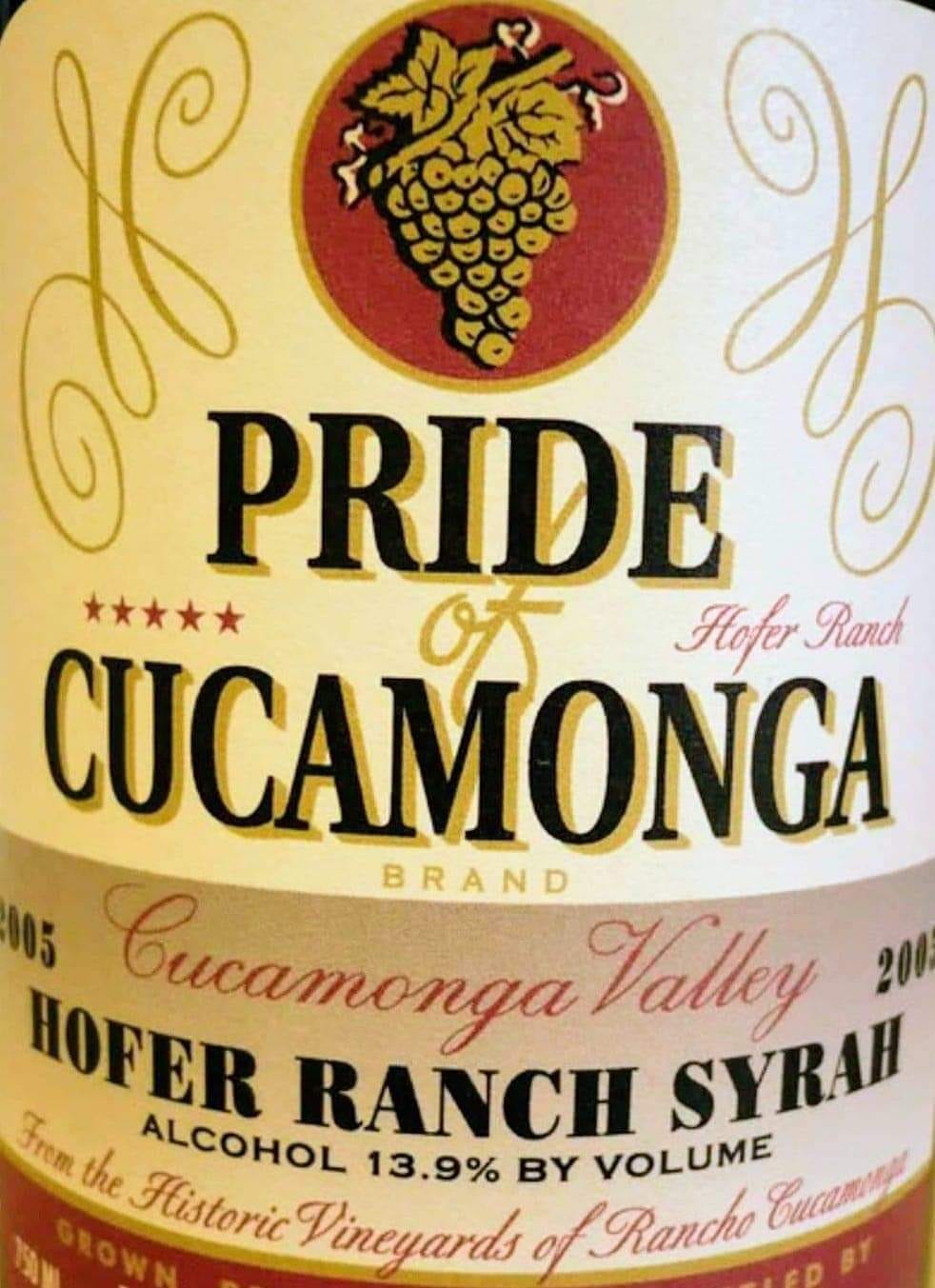
In July 1941, with Prohibition eight years gone and the Pride of Cucamonga label they had created now shipping to New York, Philadelphia, Chicago, Boston, and Atlantic City, the Vai brothers staged a publicity gala at the Cucamonga winery. The event was tied to United Artists’ film New Wine. The brothers buried a nitrogen-filled metal time capsule, said to contain Hollywood memorabilia. A sarong from Dorothy Lamour, a lock of Mary Pickford’s hair, a fake mustache from Charlie Chaplin, Lana Turner’s banned sweater. Starlets in white dresses took champagne showers under a vat of sparkling wine. Life magazine sent a photographer.
A reporter from the United Press peeked into the capsule during the party. He noted that it appeared empty.
The Vai brothers were not in the business of preserving the era. They were in the business of selling wine. The capsule was theater. The headlines were the point.
This was the Padre Vineyard Company in the summer of 1941.
The following year, my great-grandfather went to work there.
The Family Thread
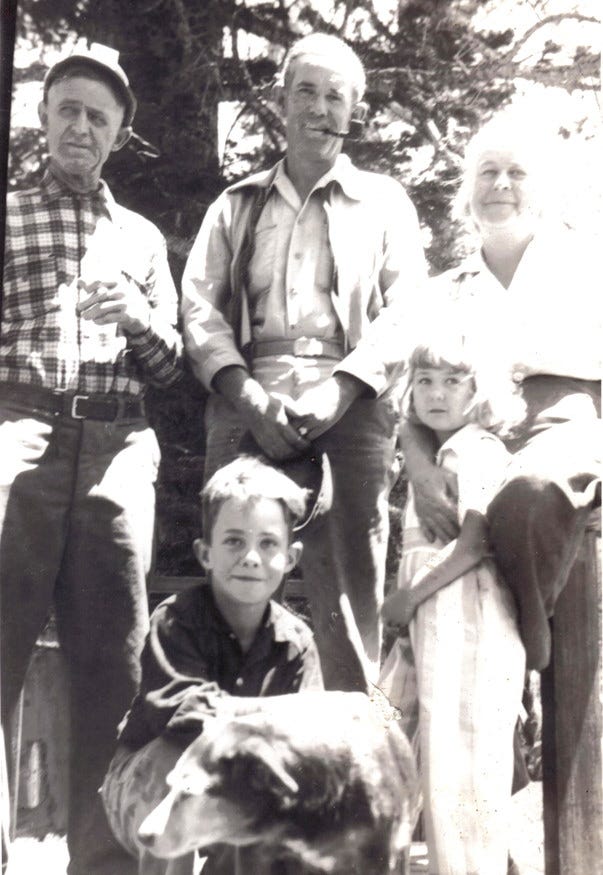
In 1942, my great-grandfather Thomas Tatton was a carpenter at the Padre Vineyard Company in Cucamonga.
He was not a vintner. He moved barrels, repaired cellar doors, and kept the buildings standing through the Vai brothers’ decade of national distribution and Hollywood publicity stunts. He was the kind of worker whose name does not appear in the histories of California wine. There were thousands of Thomas Tattons in the story of this industry. They are absent from the published accounts, and they were the backbone of every operation.
Thomas worked at the winery through his fifties and beyond. Like most men of his generation, he kept working until he was about seventy, then retired. At some point after that, he left Ontario and moved up to Lake Hughes in the Angeles National Forest, where he shared a house with his sister Marguerite. He died there in 1966. Marguerite outlived him by eleven years and died in Los Angeles.
In the chaparral, not far from where Thomas spent his last years, vines planted in 1899 by an immigrant named Eli Munz were still alive. They had survived the vineyard's abandonment in the 1950s, as well as decades of fires, neglect, and erosion. About three hundred vines remained, hidden. Thomas couldn’t have known they were there. He had spent thirty years building structures at the winery that the Vachés founded and the Vai brothers ran, and now he lived a few miles from vines that had been planted before he was born. Vines that would outlive him by another sixty years, until Patrick Kelley of Cavaletti Vineyards rediscovered them in 2020.
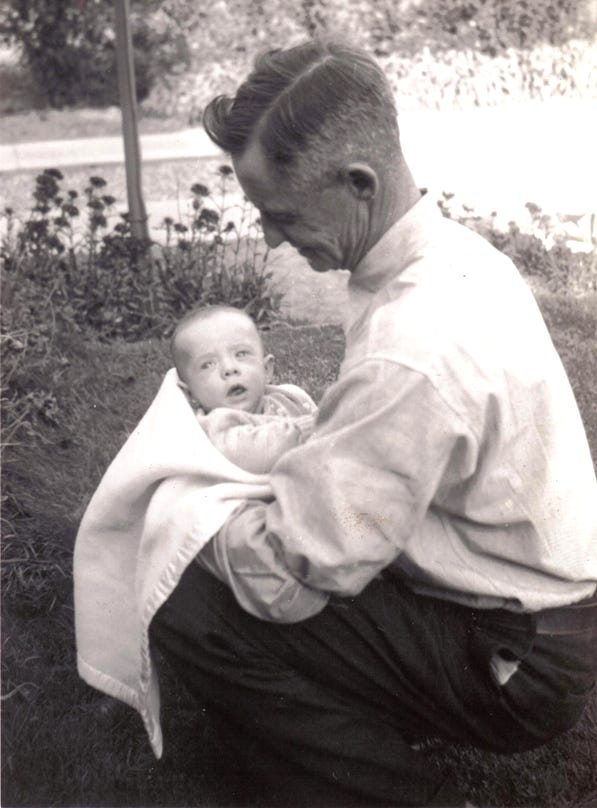
His daughter Margaret Ann Tatton was born in 1916. She married John Thomas Blair, and she is the bridge between the two families: the Tattons in Cucamonga and Lake Hughes, and the Blairs in Downey.
My grandmother, Margaret, was beautiful, sweet, and kind. She smiled and laughed and giggled. But she also carried a quiet sadness that stayed with her after my grandfather, John Thomas Blair, died in 1965, then her father, Thomas, in 1966. The year after I was born. The sadness showed up in silence and in still moments. I knew it as a child without knowing why. She died in 1975.
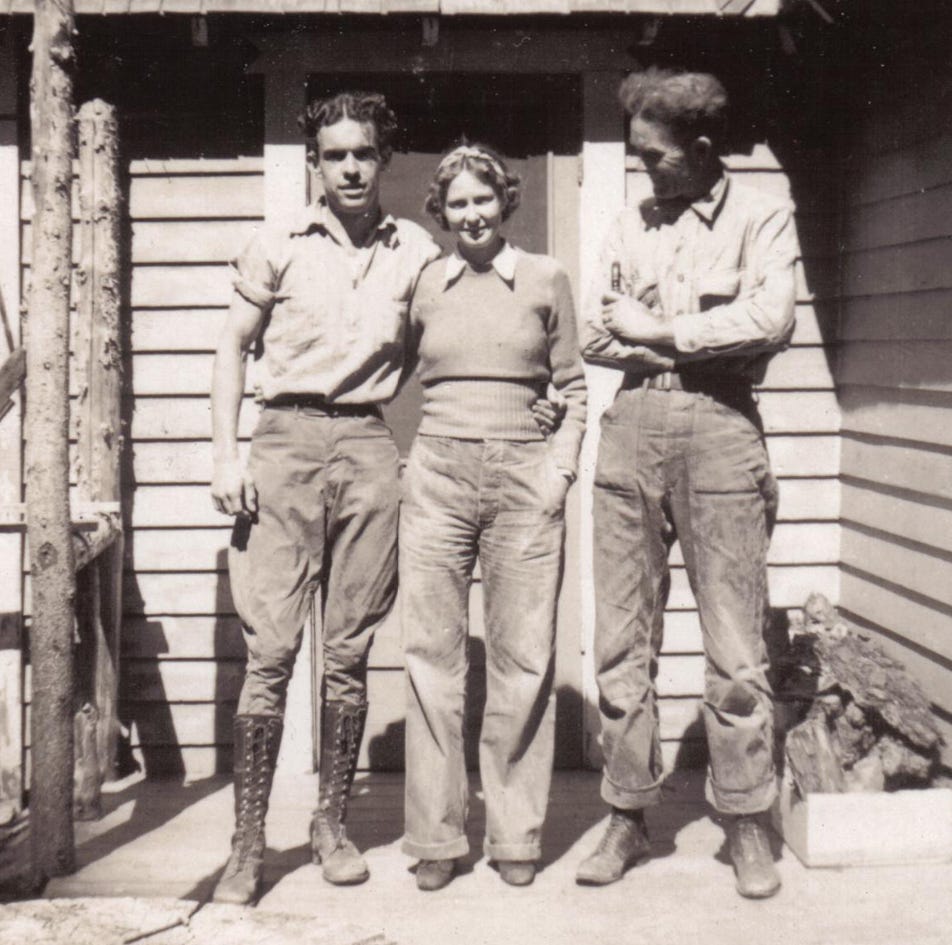
The Blairs lived in Downey. Their house is still standing. It looks the same now as it did then. But there was a second place that mattered to them: a Forest Service cabin in the redwoods, deep in northern California, near a lake, accessible by a one-lane mountain road with pullouts at the cliffs where you waited for oncoming cars to pass.
The cabin had come down through the family from my great-grandparents’ generation. They had a permit through the U.S. Forest Service program established by Congress in 1915 to allow more American families access to the outdoors. About six thousand of these cabins were built in California, most before 1950. You owned the cabin itself but leased the land beneath it from the government. There was no electricity, no insulation, no real plumbing. Just the structure, the trees, the lake, and whatever you brought up with you. You took care of it yourself and did your own upgrades.
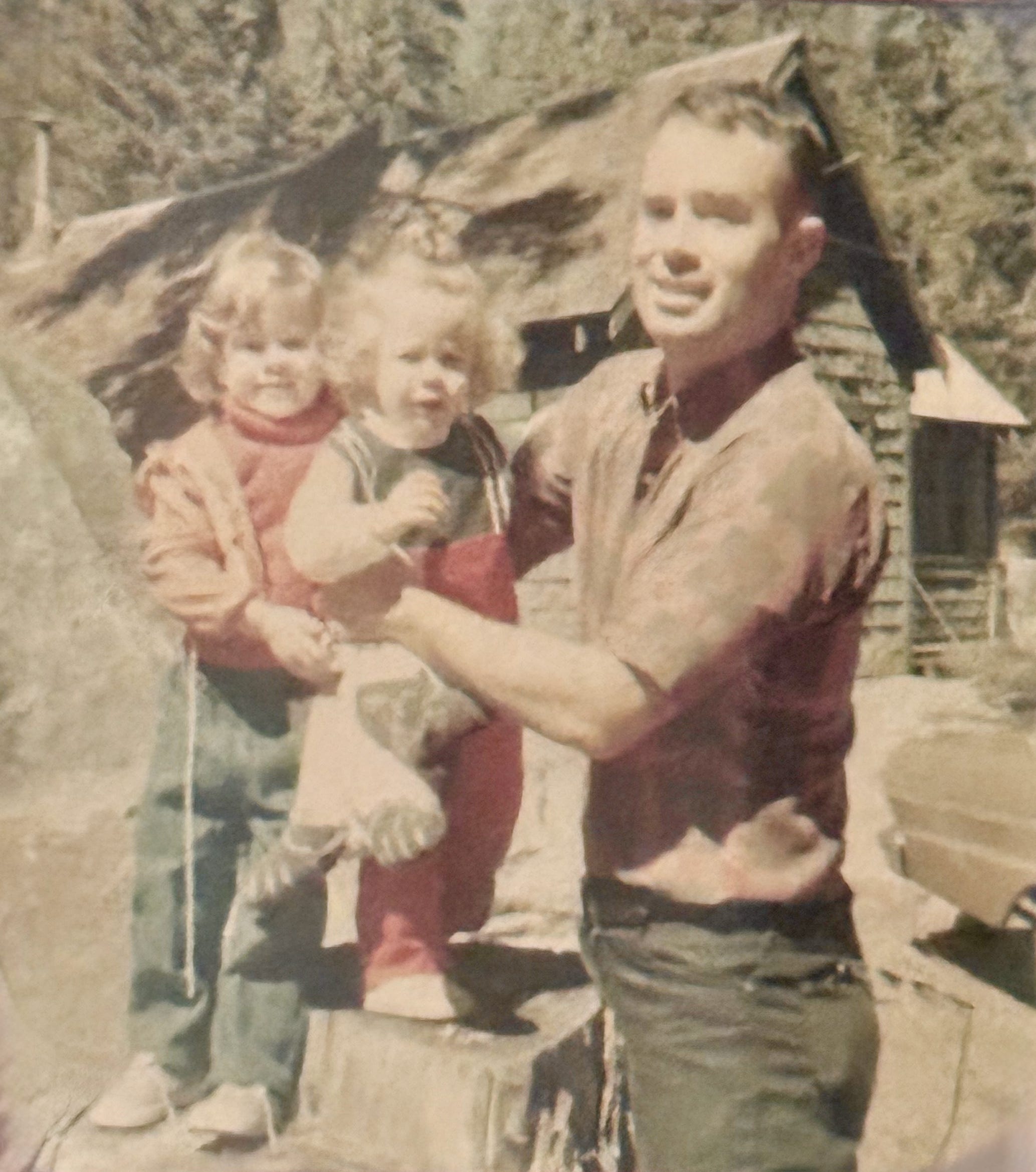
My father loved that cabin. He used to drive up as a young man to help. Fix roofs, repair the porch, and do the small, constant work that mountain cabins require. He married my mother soon after, and we went up as a family.
After my grandfather died, the cabin became harder to maintain. By then, Margaret’s two children had children of their own, and there wasn’t time for the forest anymore. My dad and my grandmother decided together to let it go. The Forest Service doesn’t sell empty lots, and once a permit is terminated, there is no path back. The cabin is gone, and there is no possibility of returning. The land it stood on is back to forest by now.
So my family is connected to two corners of this story, in two different forests. The Tattons in Cucamonga, where Thomas was building structures at the winery that became the Pride of Cucamonga, and at Lake Hughes, where he spent his last years a few miles from vines he didn’t know were there. The Blairs in Downey, with a beloved Forest Service cabin in the redwoods that Margaret and my dad surrendered together as the family grew. Two forests. One bridge between them.
My father carried a wish, all the way to the end of his life, that the family had managed to keep the cabin. But not far from where his grandfather Thomas spent his last years, vines that were planted in 1899 are still producing fruit. Against all odds, they are coming back.
The Peak and the Pivot
By the 1950s, the Cucamonga Valley was riding the last wave of its second great boom. After Prohibition, the Pride of Cucamonga label and dozens of others had rebuilt the industry. By 1939, the valley contained 41 bonded wineries and 13 brandy distilleries, with storage and fermentation capacity over 13 million gallons. By 1945, 55 wineries operated, producing wine from 35,000 acres of vineyards.
The valley supplied the rest of the country with the inexpensive, sweet, fortified, port-style wines and hearty reds that American consumers wanted. Gallon jugs. Sparkling wines. The market was massive.
In 1968, the Cucamonga Valley accounted for 98% of the 9.5 million gallons of wine produced in Southern California.
That was the peak.
The Freeway Era
In 1954, the freeway came.
On November 16 of that year, a 13.2-mile stretch of new highway opened to traffic between San Dimas and Archibald Avenue. It was called the Ramona Freeway. It would later become Interstate 10. It ran near Cucamonga Creek, cutting through the heart of the vineyard country.
Before the freeway, Route 66 had run along Foothill Boulevard, just north of the new highway. Route 66 was the vital vein of transcontinental travel. The road that carried Americans west during the Depression, the road that carried them on vacation in the 1940s and 50s. Travelers driving Route 66 passed directly through Cucamonga, stopping at the wineries, buying Pride of Cucamonga and other local bottles to take home. Sweet wine became a popular souvenir for drivers heading east. Cucamonga’s national distribution wasn’t only by rail. It was carried out in the cars and station wagons of travelers who had stopped along the way.
The new Interstate 10 didn’t replace Route 66. It bypassed it. The traffic that had once threaded through Foothill Boulevard now flew past on the freeway, on its way to and from Los Angeles. The walk-up trade evaporated. The wineries that had counted on Route 66 commerce lost a market they didn’t fully recover.
The freeway sat there through the 1950s and 1960s, slowly making the surrounding land more valuable, more accessible to developers, more attractive for warehouses and distribution centers. The Inland Empire was rising. The infrastructure was in place. The real estate pressure was building.
Then, in the 1970s, two more forces arrived.
First, American wine consumers’ tastes matured. The sweet wines that had built Cucamonga’s market fell out of favor. Drier wines, more elegant European-style productions, took their place. Northern California, Napa, and Sonoma, were experiencing a renaissance. The 1976 Judgment of Paris, where California Cabernets and Chardonnays beat their French counterparts in a blind tasting, transformed the global perception of American wine. The fine wines were now coming from the north. The mass-market sweet wines of Cucamonga were no longer what the public wanted.
Second, land values exploded. Subdivisions, warehouses, distribution centers, and strip malls were spreading east from Los Angeles. The land that had been worth $200 an acre as a vineyard was now worth $50,000 an acre as a building lot. The Pomona Freeway, the 60, followed the Ramona. The 210 came later. The valley that had been Italian villages and family wineries and the largest single vineyard in the world became a commuter corridor and a warehouse district.
Vineyards sold to developers. Wineries closed. Many of the families who had spent generations in the valley took the money and walked away. Land that could not be replaced was paved with asphalt and concrete.
The town of Guasti, which had been a complete company town with homes, a school, a post office, a general store, a firehouse, and the San Secondo d’Asti Catholic Church, was largely absorbed by the city of Ontario. Most of the original bungalows and surrounding vineyards were removed or redeveloped in the 2000s. A few historical structures remain. The church still stands, as do portions of the original Italian Vineyard Company winery. The town’s footprint now includes the 150-acre Cucamonga-Guasti Regional Park, with fishing lakes, a swim complex, water slides, and picnic areas.
The largest single vineyard in the world became a place where kids ride water slides.
The 1941 time capsule that the Vai brothers buried for a thousand years is presumably still in the ground at 9879 8th Street. Whatever is on top of it now is what the freeway era left in place.
What Remains
In the late 1970s, Pierre Biane, grandson of Marius and Marceline, descendant of the Vachés who had founded the Padre Vineyard Company a hundred years earlier, bought the old Vai Brothers winery. The same site. The grand stone buildings. The cellars. He purchased it from Dr. Pepper Beverage Company, which had owned it through the corporate consolidation period of the 1960s.
The Biane family operated the site as the Pierre Biane Winery through the late 1970s and 1980s.
By 1988, with the Cucamonga wine industry largely collapsed and the surrounding land worth far more as commercial real estate, the family transformed most of the property into a business park. Wine production ended.
But Paul Biane and Jean-Pierre Biane, Pierre’s sons, didn’t let the family’s winemaking go entirely. In the 1990s, they planted grapes on every extra inch of available ground and began making wine again. Today, the Biane Winery operates on the property of the former Pierre Biane Winery. On the grounds that the Vachés founded in 1870, that the Vai brothers built into an empire, and that my great-grandfather worked there in 1942.
Paul Biane is opening the doors to the public again.
The Galleano Winery, founded in 1927 by the Galleano family in what is now Mira Loma, is still operating and remains in the founding family’s hands. They survived Prohibition by selling grape juice with tags cautioning customers on how not to ferment it. Today, they remain one of only two Cucamonga wineries still actively making wine on family ground continuously since their founding.
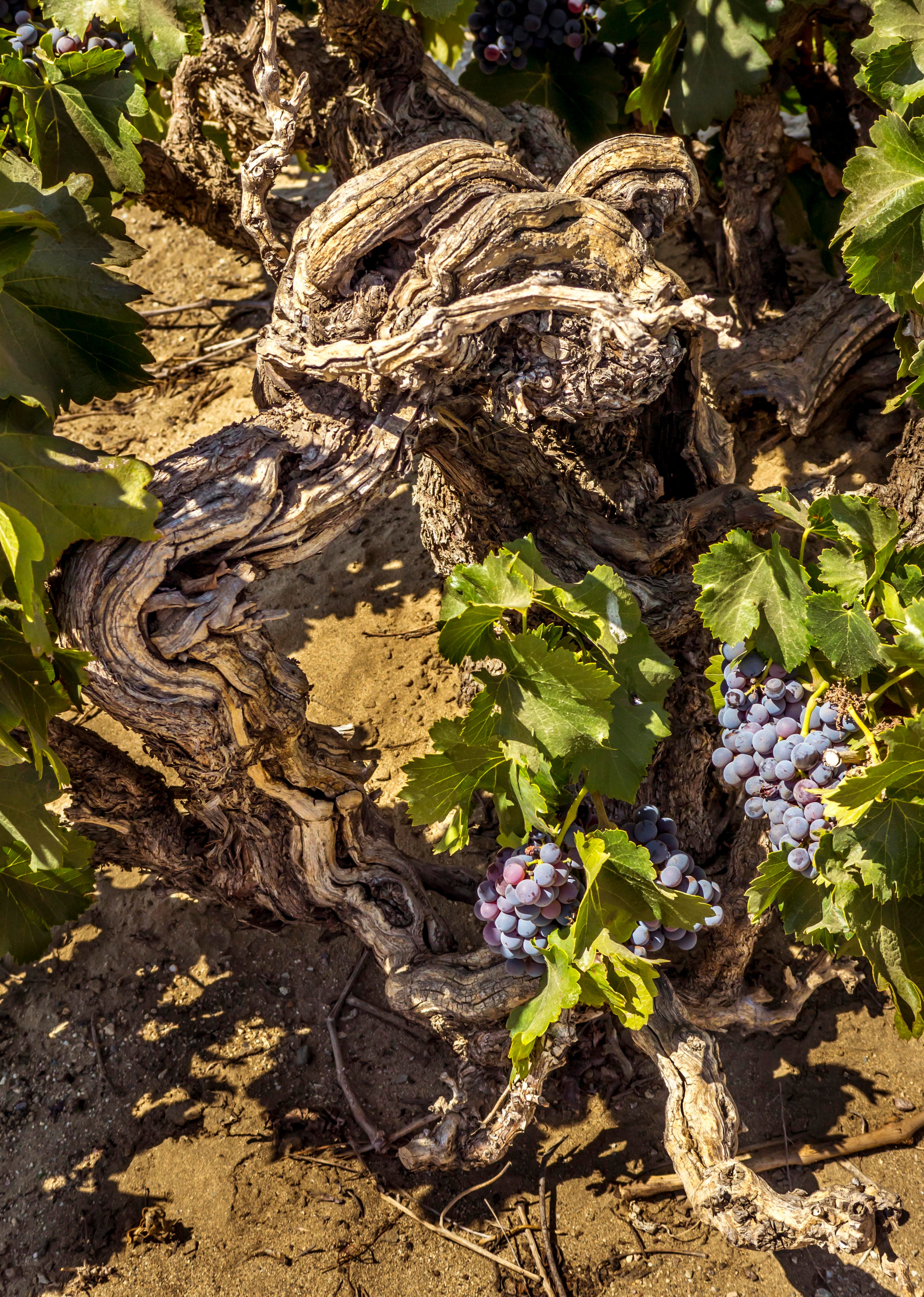
The Hofer Ranch, established in 1882, is a National Historic Register property in Ontario. The Hofer family still stewards the ranch and protects some of the oldest living Grenache vines in the country. Vines that survived Pierce’s disease, Prohibition, the freeway, and a century of urban development. They no longer operate a commercial winery themselves. They lease their historic fruit to boutique winemakers, who make wines from vines that have been in the ground for more than a hundred years.
The Joseph Filippi Winery, run by the Filippi family for decades and one of the traditional families that held on through the worst of the freeway era, recently changed hands. Joey Filippi retired. The historic site was leased to a nonprofit developer and reopened as Ellena Cellars / Regina Winery Property. The buildings are preserved. The Filippi family is no longer operating a winery.
There is also a survivor from Part Three’s story. The San Antonio Winery, founded in 1917 in Lincoln Heights by the Riboli family, is the only Los Angeles winery to make it continuously through Prohibition. They survived by producing sacramental wine. Four generations later, they still operate in Lincoln Heights, with a second location in Ontario. They are the through-line from the City of Vines to today.
Patrick Kelley at Cavaletti Vineyards is working with the rediscovered Munz vines. Rajat Parr’s Scythian Wine Co. is making wine from the surviving century-old Cucamonga vineyards. The Los Angeles Vintners Association is sourcing fruit across Southern California, including from Cucamonga.
The empire is gone. The freeway buried most of it. But the Biane family still stands on the Vaché ground. The Galleanos are still working. The Hofer Grenache vines are still producing. The Filippi site is preserved under new operators. San Antonio Winery in Lincoln Heights has never stopped. The vines that survived the freeway era are being tended again. The Mission grape descendants are still in the soil at the foot of the San Gabriels, where they have been for over a hundred and fifty years.
What was buried wasn’t entirely lost. It was buried. There’s a difference.
If your family has a connection to a place that disappeared — a vineyard, a farm, an orchard, a town, a stretch of land that became something else — I’d love to hear about it. What we keep when something is buried isn’t always what we expected.
— Jennifer
257 Years is a series on the history of wine in Southern California.
Part One introduced the family thread that started it all. Part Two traced the Mission grape from Spain to San Diego in 1769. Part Three traced Los Angeles as the original wine capital. This is Part Four.
Part Five, The Long Silence, is coming this summer: Prohibition’s national impact and what California wine lost during the dry years.
From the series:
Part One → 257 Years: How Southern California Lost and Found Its Wine
Part Two → Before Napa, There Was a Boat Leaving Spain
Part Three → Before Napa, Los Angeles Was the Wine Capital
I’m Jennifer Ann Blair. I write about food, wine, memory, and place, following stories that deserve a closer look. I hold WSET Level 3 with Merit and write from the California desert, usually with Archie, my German Shepherd, somewhere nearby.
If this made you curious, surprised you, or brought something back, tap the heart, leave a note, or send it to someone who might want to pull up a chair too.
Jenny, what wonderful history of your family. You should be so proud. Maybe that is why you enjoy learning so much about wine.