

Before Napa, Los Angeles Was the Wine Capital
A century of vineyards in downtown LA, the workers whose names aren’t on the wineries, and the collapse no one fully talks about.

257 Years is a nine-part series on the history of wine in Southern California, from the Mission grape’s arrival in San Diego in 1769 to the region’s revival today. This is Part Three. Earlier posts are linked at the bottom.
If your email truncates, the full post is on the website and in the app.

This week, we turn back to the vine and step into a city that no longer thinks of itself as wine country. But once was. Not metaphorically. Not poetically. Literally. By the numbers. By the acres. By the gallons.
Last time, I traced a single grape from a sun-scorched plain in Spain to the soil of San Diego in 1769. This week, the story moves north. To Los Angeles. To downtown LA, specifically the streets you’ve driven past a hundred times without knowing what they used to be.
I’ve been pulling on this thread for weeks now. Every time I pull, something else comes loose. A vineyard in the courtyard of the county's oldest house. A Frenchman who shipped Bordeaux cuttings around Cape Horn wrapped in damp moss. A sycamore tree, four hundred years old, marking the entrance to a hundred-acre vineyard, that lived through everything and was finally cut down in the 1890s. A disease without a name that killed twenty-five thousand acres of vines, while no one understood what it was. The Tongva people who built it all and were forbidden from drinking what they made.
This is the story of how Los Angeles became the wine capital of California. And how it stopped being one. It is also the story of who built it. Most of the names on the wineries are not the names of the people who did the work. That matters.
Let me show you what I found.
The Adobe on Olvera Street
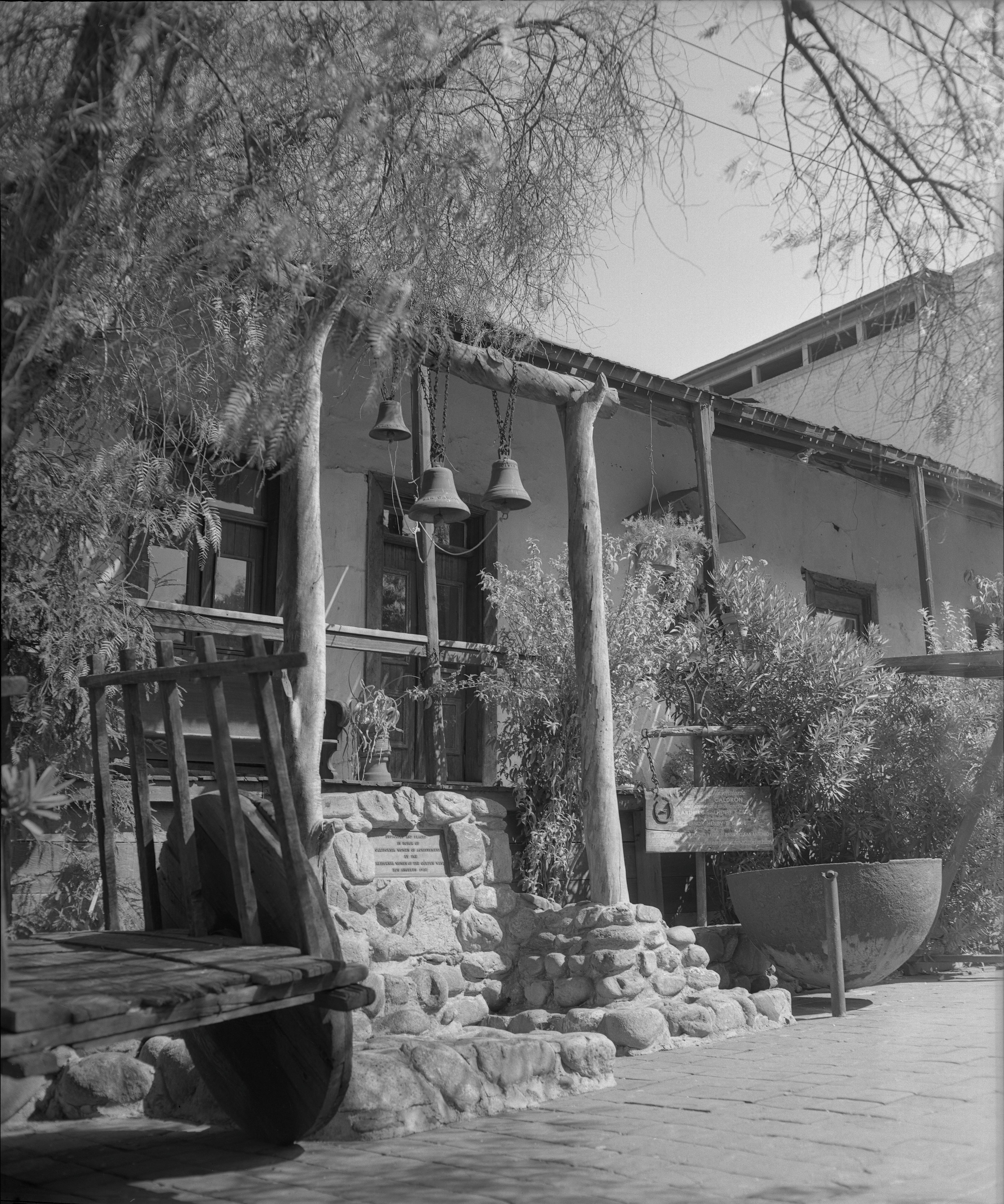
The oldest building still standing in Los Angeles County is on Olvera Street, in the heart of downtown. It was built in 1818 by Francisco Avila, a Californio rancher whose father had settled in the pueblo of Los Angeles thirty-five years earlier. In the courtyard, Avila planted a vineyard.
The vine he planted is still alive. As recently as 2016, it was documented as the oldest Mission vine in California still yielding fruit.
This is where the story of Los Angeles wine actually begins. Not in 1833, when a Frenchman arrived with cuttings from Bordeaux. Fifteen years earlier, with a Mexican-born settler planting Mission grapes in a downtown courtyard.
The Avila family had been in Los Angeles since 1783, two years after the pueblo was founded. Cornelio Avila, a Spanish soldier, arrived from Sinaloa with his wife and six children. By the time Francisco built the adobe, the family was three generations deep into the city’s founding. His son Miguel would later serve as Alcalde of San Luis Obispo and receive the land grant for Rancho San Miguelito, which today includes Avila Beach.
The vineyard on Olvera Street wasn’t an outlier. Manuel Requena had eight acres of vines, a little south of Aliso Street, on the east side of Los Angeles Street, before 1831. Pinney calls him a “man of “a well-cultivated mind, and a high order of intelligence,” making prizewinning wines from his Los Angeles vineyard before any French winemaker had set foot in the pueblo.
The story most people know about LA wine starts with a Frenchman. The truer story starts earlier. With Californios.
The Mission Engine
To understand how those Californio vineyards came to be, we have to go back to Mission San Gabriel Arcángel.
Founded in 1771 by Father Junípero Serra, fourth in the chain of California’s twenty-one missions, San Gabriel sat in the foothills east of what would become Los Angeles. It was positioned at the crossroads of three important Indigenous trade routes. Within decades, it would become the largest and most productive wine producer in Alta California, known as the Pride of the Missions and more abundant than any of the other twenty.
The Mother Vine planted at San Gabriel in the 1770s is still alive. It is a hybrid: the Mission grape crossed with Vitis girdiana, the native wild grape of Southern California. A vine that exists nowhere else on earth. The 2020 fire that destroyed much of the Mission’s roof did not kill it.
In 1786, cuttings from San Gabriel were brought to the Pueblo de Los Ángeles to establish the first plantings inside the city itself. By the time Francisco Avila built his adobe in 1818, the city had been growing Mission grapes for thirty-two years.
But none of this was built by missionaries alone.
The Tongva people, the original inhabitants of the Los Angeles basin, were the labor force at San Gabriel. They planted the vines, pruned them, harvested the fruit, pressed the grapes, and made the wine. Julia Ornelas-Higdon, a historian at California State University Channel Islands who has spent five years researching the labor history of California wine, puts it plainly: “Wine was really a tool of conquest for the Spanish.”
The Tongva were prohibited from drinking the wine they made, outside of Catholic Mass. Ownership of winemaking tools was criminalized for Indigenous Californians. “California natives are the ones who planted, pruned, harvested the grapes, and did all of that work,” Ornelas-Higdon writes. “Yet the irony is that they had very limited access to the literal fruits of their labors.”
This is how the foundation of Los Angeles wine was laid. Not in a single founding moment. In sixty years of forced labor, conversion, and disease that decimated the Tongva population. The vineyards that the Californio families inherited after 1833 were not empty land. They were vineyards built by people whose names were not written down.
The Year Everything Shifted
Mexico gained independence from Spain in 1821. In 1833, the Mexican government began secularizing the missions — taking the land from the Franciscans and redistributing it.
Mission vineyards passed into private hands. Ranchos became the new centers of wine production. Rancho Paso de Bartolo Viejo covered what is now Montebello, Whittier, and Pico Rivera. Henry “Don Enrique” Dalton’s Rancho Azusa stretched across present-day Azusa, Arcadia, Monrovia, Irwindale, and Baldwin Park. A Californio wine economy was emerging, grounded in the older traditions of the Avilas and Requena, now scaled to the ranchos.
Eighteen thirty-three was also the year Jean-Louis Vignes arrived.
The Frenchman and El Aliso
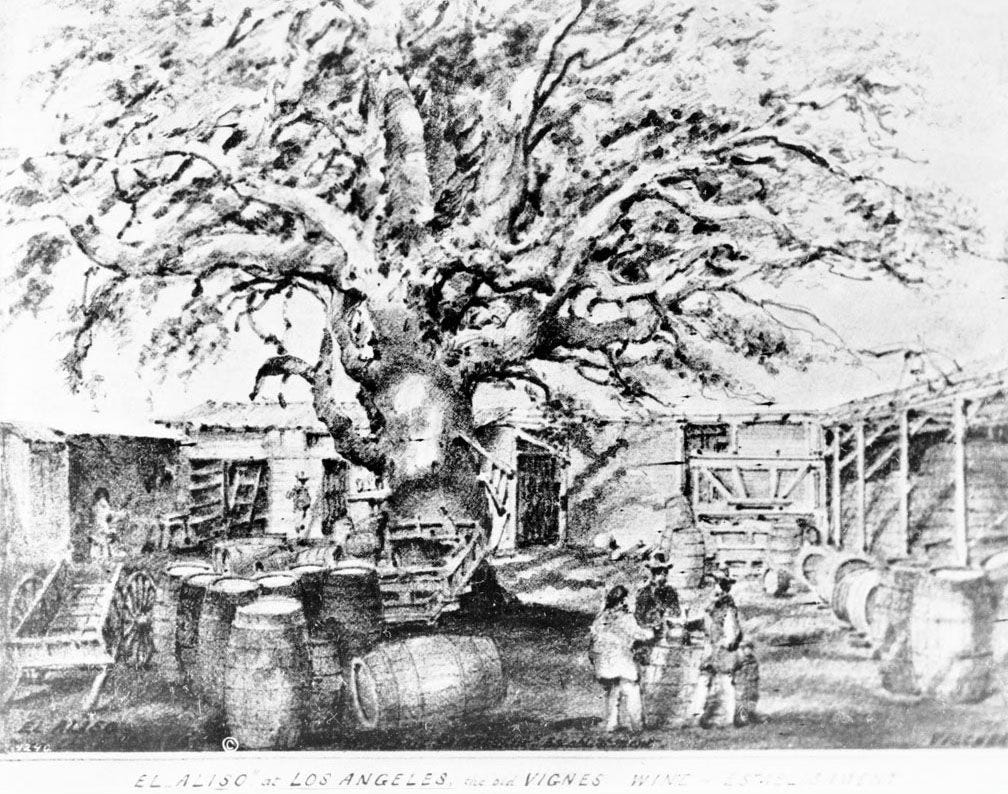
Jean-Louis Vignes was born in 1780 in Cadillac, a town in the Bordeaux wine country. He was a trained cooper. He arrived in Los Angeles in 1831, fifty-one years old, and within two years had acquired one hundred and four acres of land in the heart of the pueblo’s vineyard district.
Pinney maps the property precisely: it ran from Alameda Street on the west to the Los Angeles River on the east, and from Aliso Street south to First Street. One hundred and four acres, in what is now the heart of downtown Los Angeles. Today, Union Station sits inside what used to be his vineyard.
At the entrance to the property stood a giant sycamore tree. The Spanish word for sycamore is aliso. The tree gave the vineyard its name, “El Aliso,” and gave the street its name, too. Aliso Street is still on the map.
The tree was sixty feet high and twenty feet in circumference. When it finally died and was cut down in the 1890s, it was estimated to be four hundred years old. It had been standing when the Tongva villages were the only settlements in the basin. It witnessed the Spanish arrival, the building of Mission San Gabriel, the founding of the pueblo, the Mexican period, the rise of LA wine, and the beginning of its end.
Vignes planted the Mission grape on most of his acreage. But in 1833, he did something none of the Californio winemakers had done: he imported European Vitis vinifera cuttings from his native Bordeaux. Cabernet Franc. Sauvignon Blanc. He had the cuttings wrapped in damp moss and slices of potato to survive the journey around Cape Horn.
This is the moment most histories of California wine choose as their starting point. It’s not wrong, exactly. Vignes did bring the first non-Mission European varieties to California. The quality of the wine produced in Los Angeles changed because of him. He became one of the wealthiest men in the pueblo, known as Don Luis del Aliso.
But Vignes did not found Los Angeles wine. He arrived inside it. The Californios had been growing grapes for decades. The Tongva had been doing the labor for sixty years. Vignes raised the ceiling. He didn’t lay the foundation.
The City of Vines
By the mid-1850s, Los Angeles had a nickname: the City of Vines. It was not a marketing slogan. It was a description.
In 1857, California produced 385,000 gallons of wine. Of those, 350,000 gallons came from Los Angeles. That’s 91 percent. The county nearest to LA in scale was Santa Clara, with 150,000 vines. Los Angeles County had over a million.
Sonoma, Pinney notes, was just beginning to be heard from. Napa, hardly at all yet.
This was not a small wine region. This was the engine of California wine.
The figures of the era are worth naming. William Wolfskill, born in Kentucky, came to Los Angeles as a trapper and became the largest vineyard owner in the city. He would later expand into Yolo and Solano counties. Pierre Sainsevain, Vignes’s nephew, took over El Aliso and in 1855 became the first commercial sparkling wine producer in California. Charles Kohler and John Frohling, German immigrants, built Kohler & Frohling into one of the largest wine companies of the era. Frohling was also one of the founders of Anaheim, which was established in 1857 as a German-American wine colony. At its peak, the Anaheim Colony had over a million vines planted.
Matthew Keller, the kind of figure every era produces, claimed in his statistics that Los Angeles County had a million and a half bearing vines and another eight hundred and seventy-five thousand not yet productive, with plans for a million more cuttings the next season. Pinney notes drily that Keller’s numbers were “no doubt inflated.” But even with the inflation removed, the picture is the same. LA County was the dominant wine producer in California by a margin that’s almost difficult to believe today.
The transcontinental railroad arrived in 1876. Bulk wine could now be shipped to East Coast markets in refrigerated rail cars, bypassing the slow and expensive sea route around Cape Horn. The industry boomed.
The Hands That Built It
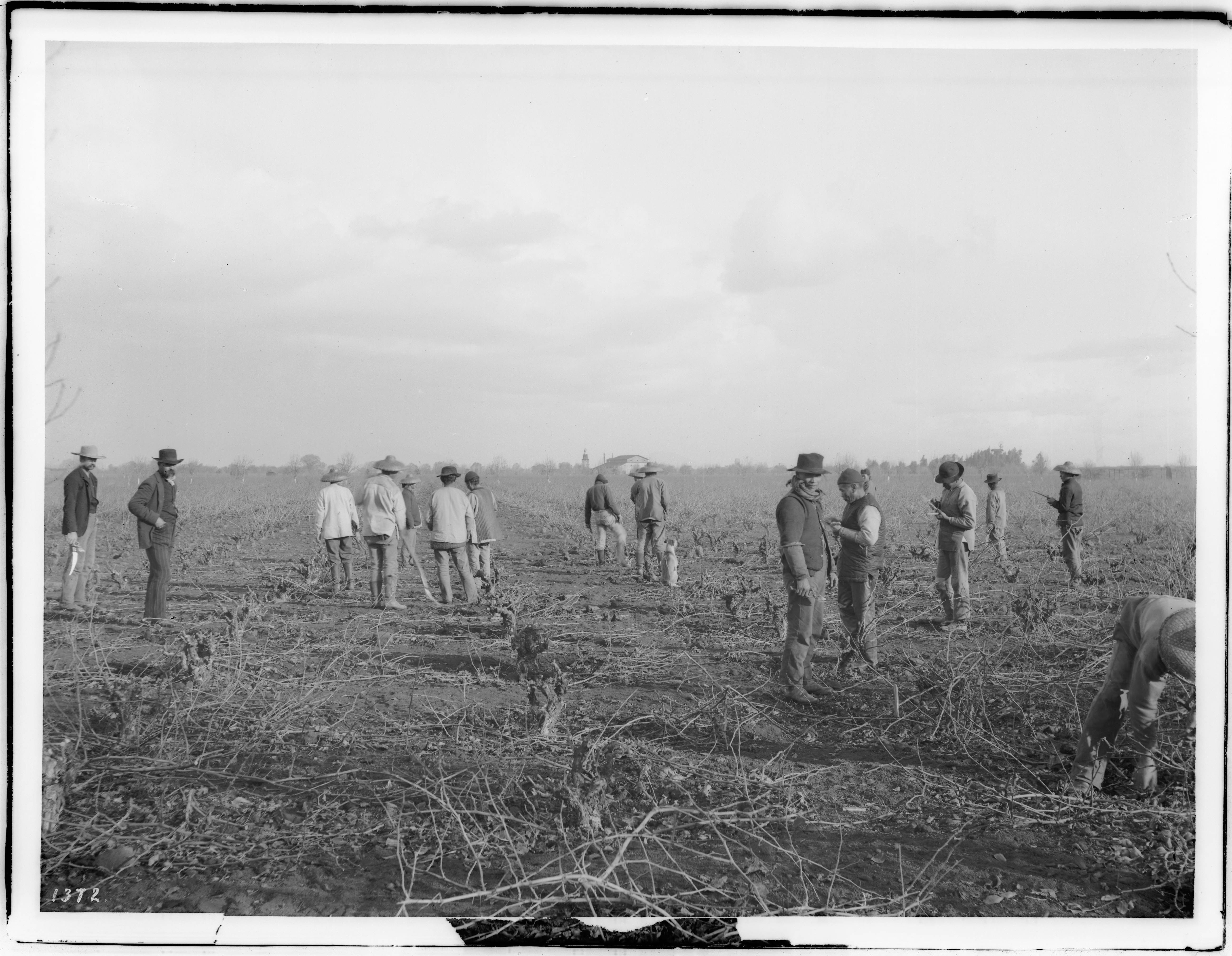
The boom did not happen because of the men whose names are on the wineries. It happened because of the workers whose names are not.
Ornelas-Higdon’s research is unsparing on this point. “If we peel back the layers of this history,” she writes, “we see this amazing, diverse industry that was really working class, that was immigrant, and that included a lot of populations of color.”
The labor force of Los Angeles wine in the second half of the nineteenth century included Indigenous Californians — Tongva, Chumash, and others displaced from the missions, often returning as wage laborers to vineyards their ancestors had built. It included Mexican Californios, both as landowners and as workers. In the 1860s and 1870s, vineyard owners began recruiting Mexican and Yaqui (Yoeme) laborers from the Arizona-Sonora borderlands.
But the most sought-after workforce of the era was Chinese immigrant laborers. They cleared the land. They planted the vines. They pruned and harvested. They dug the wine caves by hand.
Ornelas-Higdon documents the reasons: “They were stereotyped as being compliant and docile, which made them desirable. Also, vineyard owners could get away with paying them less money and putting them up in substandard housing for much less than what they would pay white workers.”
The Chinese Exclusion Act of 1882 cut off the immigration that had built much of Los Angeles wine. By then, much of the work was done. The vineyards bore the names of the men who owned them. Not the names of the people who built them.
This is the history that gets edited out when California wine tells the story of itself. It is the history that has to be written back in.
The Mysterious Disease
In 1884, vines in the Santa Ana Valley began to show strange signs. Leaves browned at the edges. Fruit failed to ripen. Vines died slowly through the growing season rather than all at once.
In 1885, the disaster broke open. Whole vineyards in Anaheim turned to dead wood. Within a year, it was everywhere.
Growers gave the disease different names as they tried to understand it. The Mysterious Disease. The New Disease. The Los Angeles Rot. The California Disease. The Anaheim Disease. None of the names helped. The vines kept dying.
By the end of the decade, winegrowing in and around Anaheim was finished. Pinney documents twenty-five thousand acres of vineyard dead across Anaheim, the San Gabriel Valley, and San Bernardino County. The German colony’s million-plus vines were largely gone.
In 1891, the United States Department of Agriculture sent a pathologist, Newton B. Pierce, to investigate. His findings, published in 1892, identified a microorganism that had begun spreading in the Santa Ana Valley around 1884. Seven years before the federal government took it seriously. The disease that bears his name today, Pierce’s disease, is now understood as a bacterial infection carried by sharpshooter insects.
In 1885, no one knew that. They only knew their vineyards were dying.
Several things were happening at once. The disease was one. Real estate was another. Los Angeles was growing fast, and land that had been vineyards became more valuable as building lots than as farmland. The citrus industry was rising. Oranges proved more profitable than wine grapes. Northern California, less affected by Pierce’s disease and benefiting from cooler nights, expanded rapidly. By 1890, Sonoma and Napa together outproduced Southern California by a five-to-one ratio.
The Sainsevain brothers, Pierre and Jean-Louis, closed El Aliso and moved east, into the Cucamonga Valley. They were not the only ones. The surviving Los Angeles winemakers pushed east, into the foothills of the San Gabriel Mountains, looking for land that hadn’t yet been infected, urbanized, or sold to developers.
That story, What happened in Cucamonga, is the next installment.
What Remains
Walk through downtown Los Angeles today, and you can still find the bones.
Vignes Street still bears his name. Aliso Street still marks where the great sycamore stood. The Avila Adobe is still on Olvera Street. The vine in its courtyard is still alive. Michael Holland, a Los Angeles city archivist, makes small-batch wine from those vines.
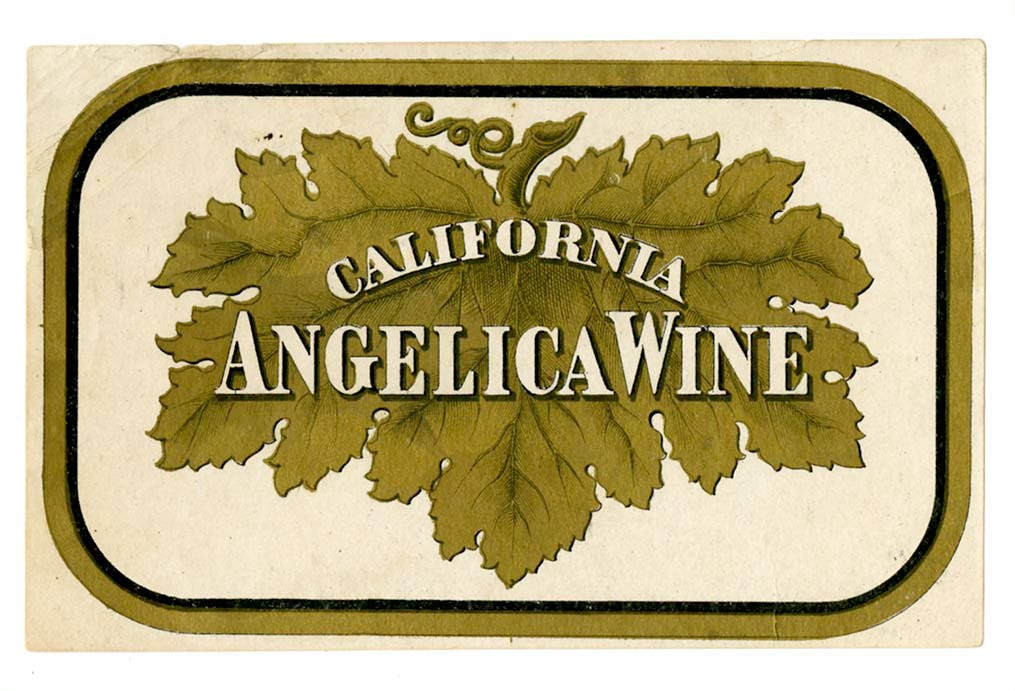
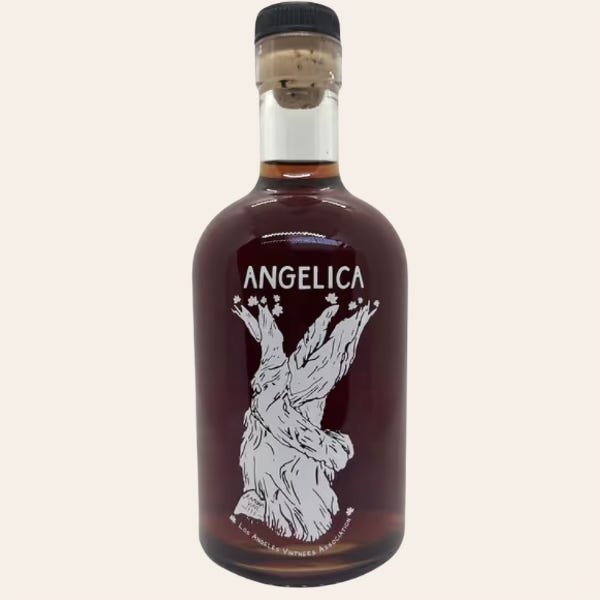
The Ramona Vine still grows at Mission San Gabriel. Believed to be 249 years old, planted before the United States was a nation. It has grown as large as a tree, sprawling across the mission grounds. It is, by the Los Angeles Vintners Association's reckoning, the oldest tended grapevine in the United States. After the 2020 fire, the association harvested its grapes and made Angelica, the sweet, fortified wine that takes its name from Los Angeles itself, and that historians consider the first true California wine. They followed the padres' old method: fresh-crushed Mission grape juice, fortified with brandy before it could ferment, aged at least three years in barrel. One of the winemakers said it tasted like cherry cordial. A flavor profile unique in the world. It is, for now, sold out. I’m on the waitlist. So is everyone else.
The group that did that work, the Los Angeles Vintners Association, was founded in 2019 by Mark Blatty of Byron Blatty Wines, joined by Jasper Dickson and Amy Luftig Viste of Angeleno Wine Company, Patrick Kelley of Cavaletti Vineyards, and Ben and Katy Sposato of Acri Wine Company. They are working with growers across Southern California, from Agua Dulce to the Antelope Valley to Dulzura on the Mexican border, to revive the city’s lost winemaking tradition.
Other producers are scattered across the county. Charles Wine Co. in Santa Clarita’s Sierra Pelona Valley. Reyes Winery on fourteen acres in the same valley. Mighty Yee Wines, made by Linda Yee on annual trips to Sonoma. The work is small. The wines are real.
Los Angeles will probably never again be the wine capital of California. The land is gone, paved over, built up, far too valuable now for vines. But what was here was not erased. It was buried. And the people working today to bring it back, to plant new vines, to harvest the surviving old ones, to make wine that honors what came before, are doing something that matters.
The story told most often about California wine starts with a Frenchman named Vignes. The truer story starts earlier. With a vineyard in a downtown courtyard. With the Tongva who planted at San Gabriel. With a Californio named Manuel Requena. With a sycamore tree that watched it all and lived for four hundred years.
The City of Vines is gone. But the bones are still here.

If your family came to California for the land, to farm, to plant, to harvest, to build something out of the ground, I’d love to hear about it. The vines, the orchards, the fields. The work that doesn’t always make it into the history books.
If this landed, tap the heart. It helps more people find the table.
— Jennifer
257 Years is a series on the history of wine in Southern California.
Part One introduced the family thread that started it all. Part Two traced the Mission grape from Spain to San Diego in 1769. This is Part Three.
Part Four: What the Freeway Buried is coming this summer about the Cucamonga Valley, Secondo Guasti’s empire, and the families that held on.
From the series:
Part One → 257 Years: How Southern California Lost and Found Its Wine
Part Two → Before Napa, There Was a Boat Leaving Spain
Jennifer Ann Blair writes about what’s worth remembering — a recipe, a person, a city of vines.
What an excellent article! So thoroughly researched, informative and well-written. Thank you!
Thank you Linda. Isn’t this just fascinating? I had no idea Southern California was once the King of Vines!