

Mary Jane's Butterscotch Nut Bread
From German ancestry to American kitchens, a sweet bread tradition enriched with brown sugar, buttermilk, and family history spanning continents

Welcome to this week’s edition of The Dinner Bell Newsletter. Gather ‘round as we journey from my grandma’s kitchen to the mist-shrouded peaks of Germany, where ancient traditions and modern celebrations intertwine, and unravel the fascinating threads of family history from Germany to France.
Family Ancestry
In the 1800s, many Germans emigrated to the United States for various reasons, including religious persecution and economic opportunity.
The Glasers and Schurgers arrived in the early 1800s from Urspringen, Main-Spessart, Bavaria, landing at the port of New York before settling in Saint Peter, an unincorporated community in Highland Township, Franklin County, Indiana. Urspringen is a very small town in Bavaria, located two hours from Munich and four hours from Berlin, with a population of around 1,350.
The Wissel family emigrated to the United States in 1846, coming from Aschaffenburg, a culturally rich town in northwest Bavaria. Back then, Aschaffenburg was prospering. It became part of the Grand Duchy of Frankfurt in 1810, remained Dalberg’s residence, and was annexed to Bavaria by 1814.
In 1857, Andrew (Andreas) Wissel married Louisa Kilgenstein, who hailed from Ohio. The Kilgensteins originally came from France, specifically from an area now known as Neuchâtel, Switzerland, which was predominantly French-speaking. The Lileurs, another branch of the family, emigrated from Alsace, France, in 1812. Alsace has a complex history, having spent long periods under German rule, which sometimes makes it culturally considered German. Census records can vary depending on whether the region was governed by Germany or France at the time of the record.
I haven’t stumbled upon any Prussian Empire kings in the family yet, but when I do, you’ll be the first to know! Next week, I’ll delve into the Irish Carnes side of the family and see if I can uncover a Celtic icon. Anyway, that’s enough ancestry for now; it’s time for some German Halloween-related fun, magical forests, and a buttery butterscotch nut bread recipe!
Walpurgis Nacht


As promised, I researched Walpurgis Night and, five days before our Halloween, discovered its fascinating story. Known as Germany’s Halloween, Walpurgis Night takes place every year on April 30, ushering in spring with a touch of witchy tradition into the early hours of May 1. Like Halloween, Walpurgis Nacht has roots in pagan celebrations, marking seasonal changes and honoring Saint Walpurga, who was canonized on May 1. She is remembered for her protection against pests, illness, and witchcraft.
Medieval traditions persist, such as hanging sprigs of foliage, dressing in costumes, and leaving Ankenschnitt (bread with butter and honey) as offerings for phantom hounds. Modern customs now include fireworks, folk songs, and enormous bonfires. When the flames subside, couples jump over the embers in a ritual called the “corn jump.”
For centuries, witches have gathered on the Brocken, the highest peak in the Harz Mountains, for large celebrations. Over time, the towns and villages around the Harz have embraced this identity as a place of wild, magical allure.
Harz Mountains

The Harz Mountains are a land of fairy tales, filled with dark forests, rushing streams, and stormy peaks, along with steep-roofed houses, tiny windows, and narrow cobblestone streets. Located in central Germany, these mountains are famous for their role in German folklore, inspiring tales collected by the Brothers Grimm, such as Cinderella, Hansel and Gretel, Sleeping Beauty, Rumpelstiltskin, Tom Thumb, Little Red Riding Hood, Rapunzel, The Frog Prince, and The Wolf and the Seven Kids. Known for their silver mines, many villagers historically worked underground—a setting that echoes the story of Snow White and the Seven Dwarves.
Considered a mini-Black Forest to northern Germans, the Harz mountains cover an area about 100km long and 30km wide where Saxony-Anhalt, Thuringia, and Lower Saxony meet. Soaring peaks may be absent, but the region is blessed with thickly wooded rolling hills, low peaks, and snug valleys where small villages and modest resort towns nestle, offering pleasant bases for a variety of outdoor activities. The key points of interest are Thale, for its location at the mouth of the Bode Valley and its appeal as an attractive hiking destination; the Brocken, the Harz’s highest peak with its captivating associations with the pagan festival Walpurgisnacht; and the low-key ski resort town of Braunlage. Towns in the foothills, such as Quedlinburg and Goslar, are also possible gateways for forays into the hills, but if you’re reliant on public transport, you’ll need to rise early; though offering vital shuttle services to hikers, bus connections around the Harz take time. Trains are a bit faster and, as part of a network of narrow-gauge railways with steam trains, the journeys are a delight in themselves.
Hear that? It’s The Dinner Bell, calling you home! Join us as we pull up a chair at our family table.

Mary Jane’s Butterscotch Nut Bread
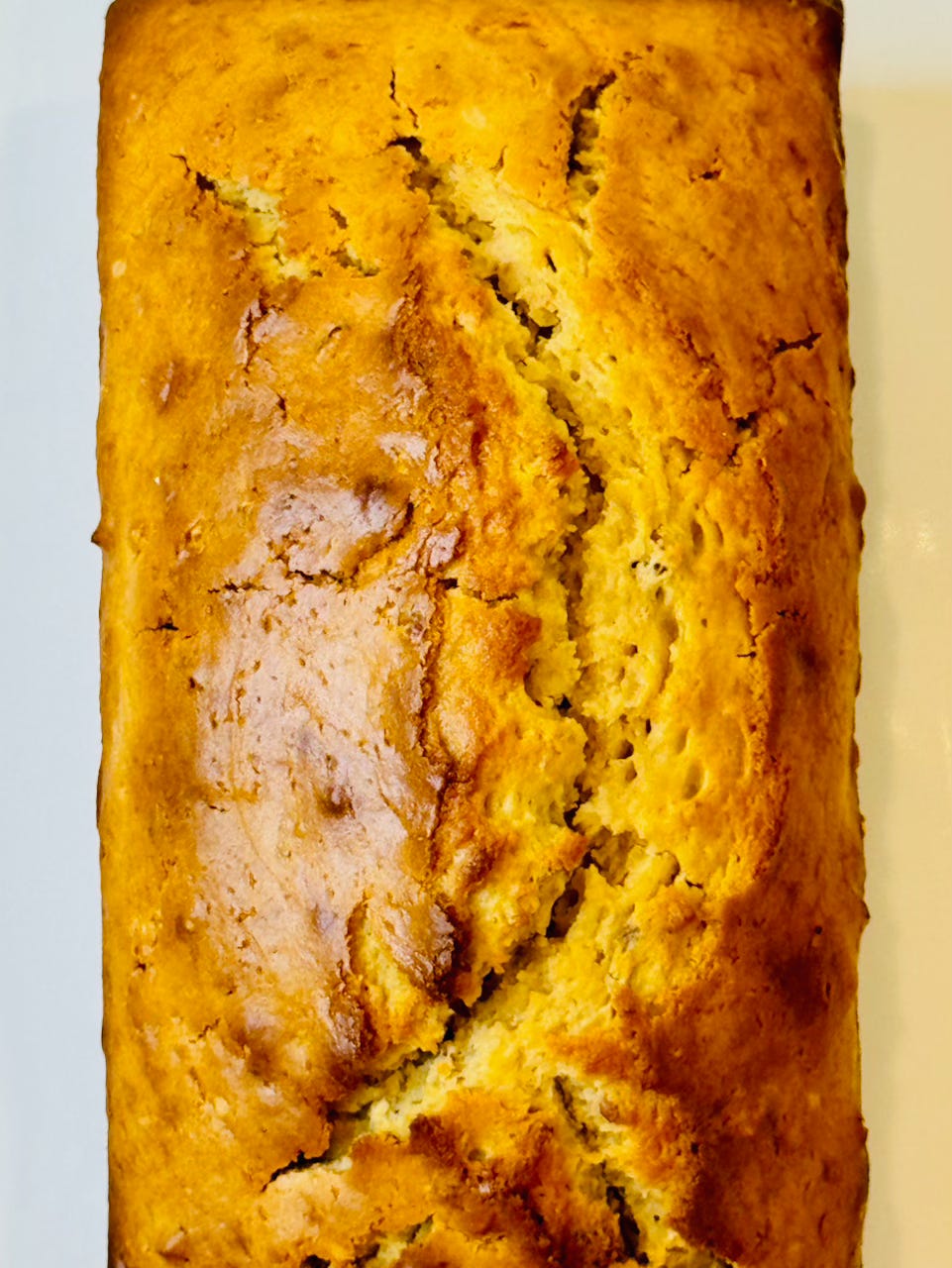
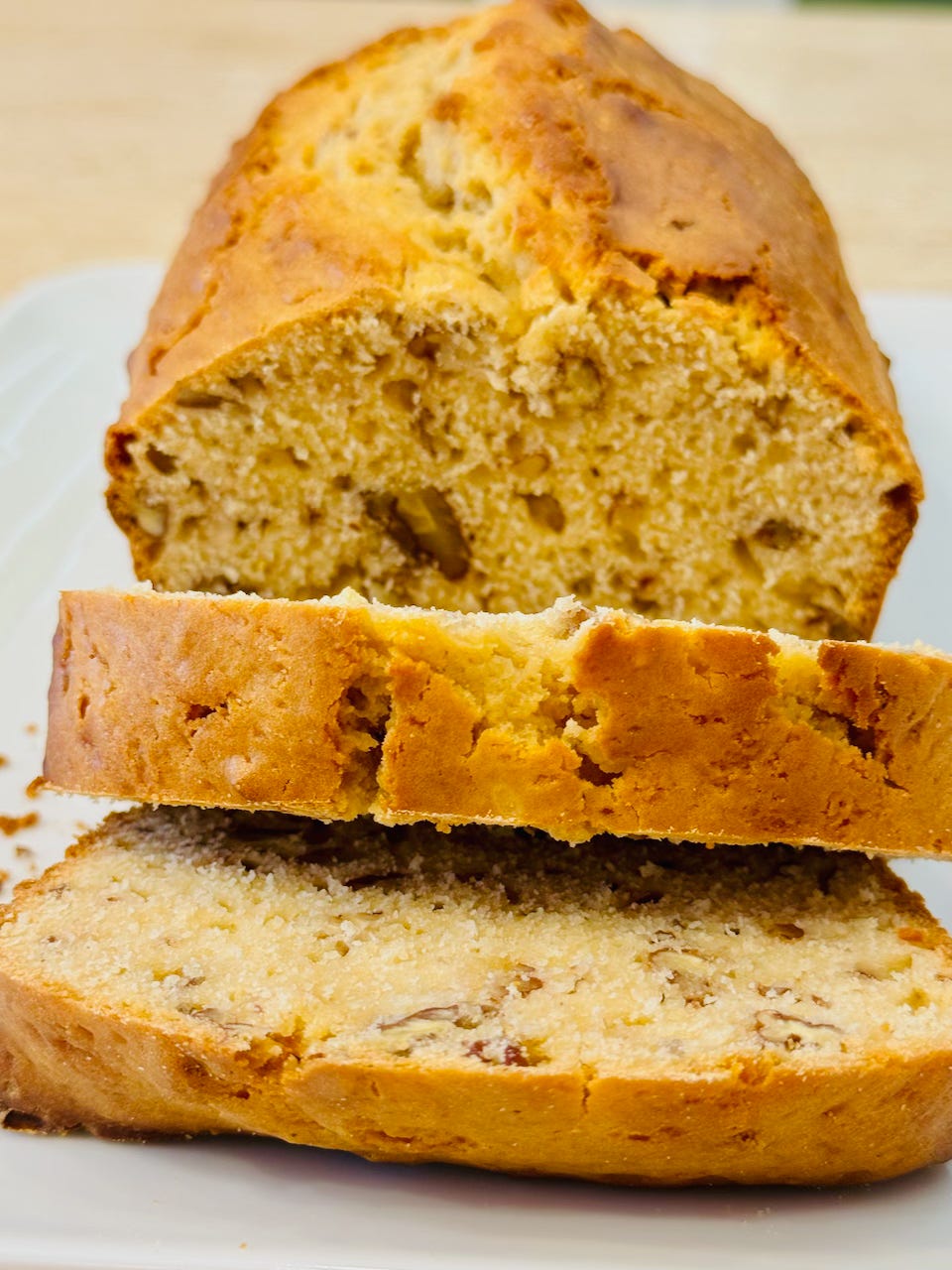
Each slice of this bread is soft and tender, with a moist crumb that melts in your mouth. The flavor is rich and sweet, with brown sugar lending a warm, toffee-like taste, balanced by a slight tang from the buttermilk. Chopped nuts add a subtle crunch that complements the creamy, caramel-like sweetness. The overall experience is a delightful blend of sweet, nutty, and buttery flavors, with a hint of salt to enhance each bite.
By the way, butterscotch nut bread doesn’t actually contain butterscotch. Rather, it refers to the classic flavor combination of brown sugar and butter.
Yield: 2 loaves | Prep: 15 min. | Cook: 60 min.
Ingredients
2 eggs
1 lb. light brown sugar
3 tbsp. butter
3 cups flour
1 tsp. baking soda
1/2 tsp. salt
2 cups buttermilk
1 cup chopped nuts
Directions
Preheat your oven to 375 ºF.
In a mixer, add the eggs and beat until well combined.
Melt the butter, then add it to the mixer along with the sugar. Beat well until the mixture is smooth.
Sift together your dry ingredients: flour, baking soda, and salt. Gradually add the dry mixture to the wet ingredients, alternating with the buttermilk, and mix until well combined.
Stir in your chopped nuts; I used pecans, but walnuts would work nicely too.
Pour the batter into two greased pans.
Bake for 1 hour or until golden brown.
Enjoy warm or at room temperature, topped with a thin layer of softened butter or cream cheese on each slice. Pair it with a steaming cup of freshly brewed coffee and slices of apples or pears for a delightful treat.
🍯 Did this post add a sweet treat to your day? Spread the joy! Share it with your food-loving friends or treat them to a taste of home with a gift subscription to The Dinner Bell.
🤭 Grinning from ear to ear? Leave a comment 💬 or show your love with a ♥️. You’re the secret ingredient in our shared table of stories!
Jenny, I remember when Mom would do this at Christmas time. She would actually bake the bread in old soup cans. She would then take the bread out of the cans and wrap in foil and ribbon and give as gifts. Good memories.
I really enjoyed this session on my family and the country they came from. I am glad to learn about history and the people who were here before me
I am sure the people and the countries that my family came from influenced me a great deal
Loved the bread and I appreciate the work the author has put into investigating our family