

Irish Stew ☘️ Guinness
A Hearty Slow-Simmered Irish Stew Tradition & The Perfect Pint

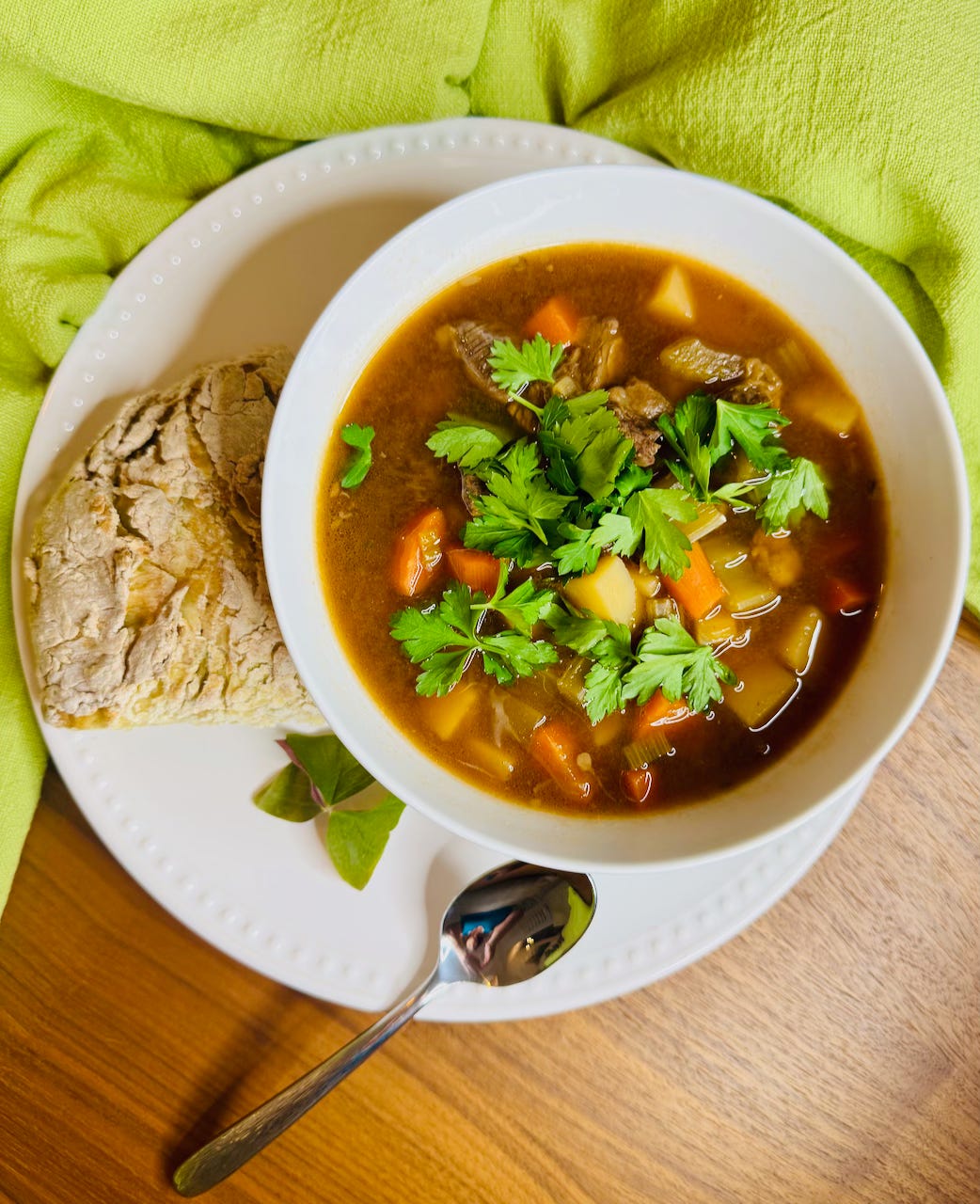
March brings mirth and merriment, romance and luck, tulips and daffodils, the first whispers of spring, St. Patrick’s Day, and Easter. It’s when citrus trees swell with juice, asparagus, lettuce, and green onions grace our plates, and strawberries make their way into dessert.
Today, I’m dreaming of Irish music and lively pubs, hearty stew and fresh-baked soda bread, creamy mashed potatoes, and a perfectly poured pint of Guinness. I wish I were clinking glasses with friends—old and new—soaking in the warmth, camaraderie, and spirit of St. Patrick’s Day. I can almost hear the fiddles, smell the rich aroma of stew simmering, and feel the smooth wooden bar beneath my elbows as I lift my glass in celebration.
And while I know St. Patrick’s Day is tomorrow, March 17th, our posts arrive on Sundays—so consider this a little nudge to invite the luck of the Irish into your kitchen and your life this weekend.
To set the mood, let me take you on a journey to Ireland—where I’ve wandered three times, each visit a fresh adventure, always filled with laughter, music, and the magic of the Emerald Isle. I’ve shared these travels with friends, family, nieces, and nephews, giggling and dancing our way through the lyrical green land of Irish lore.

A Warm Welcome in Kilkenny
Some of my fondest memories come from Kilkenny, where my sisters and mom began our day at Mnoc Mhuire with our host, Helen. She welcomed us with a proper Irish breakfast—muesli, yogurt, bacon, and, most memorably, Dubliner cheese. Oh, Dubliner cheese! This was long before it appeared on grocery store shelves back home, so we carefully tucked the wrapper away, determined to track it down once we returned.
We wandered the ancient walls of Kilkenny Castle, intrigued enough to step inside for a proper tour. There, we learned about the Butlers, the castle’s longtime stewards, who once managed lands stretching to the mountains of Waterford. One room captivated me most—the parlor, where a writing desk overlooked rolling green lawns. What a place that must have been to write! Outside, we admired the rose garden, designed in the shape of a Celtic cross, then crossed the street to the Design Centre (housed in the castle’s former stables) before meandering through medieval alleyways that seemed to whisper secrets of centuries past.
As the sun dipped low, we sought warmth, good food, and lively conversation at two unforgettable spots—first, Langton’s for hearty fare and whiskey, then Kyteler’s for raucous fun and, of course, Guinness.
Langton’s Bar – A ’60s-inspired reverie (though much changed since my 2002 visit), where we devoured hearty bowls of Irish Stew, thick slices of Brown Bread, and sipped on Baileys and Bushmills Irish whiskey.
Kytelers Inn – A rustic, dark Irish pub where Guinness was the only menu item that mattered. Sometimes, simplicity is perfection.

A Circle of Friends
The next day, we ventured into the village of Inistioge in County Kilkenny, crossing a 10-arch stone bridge into a storybook setting—tree-lined squares, 18th and 19th-century homes, and the gentle curve of the River Nore. As longtime fans of the 1995 film Circle of Friends, we followed in its footsteps, strolling the riverbank and the Woodstock Gardens before stopping at Woodman Café (where I undoubtedly ordered the soup of the day, my go-to in Ireland). We ended our visit at O’Donnell’s Pub (sadly no longer in operation), where pints and darts stretched late into the afternoon.

Kilkenny remains one of the most beautiful places I’ve ever visited—its charm, warmth, and history the perfect backdrop for today’s Irish Stew recipe.

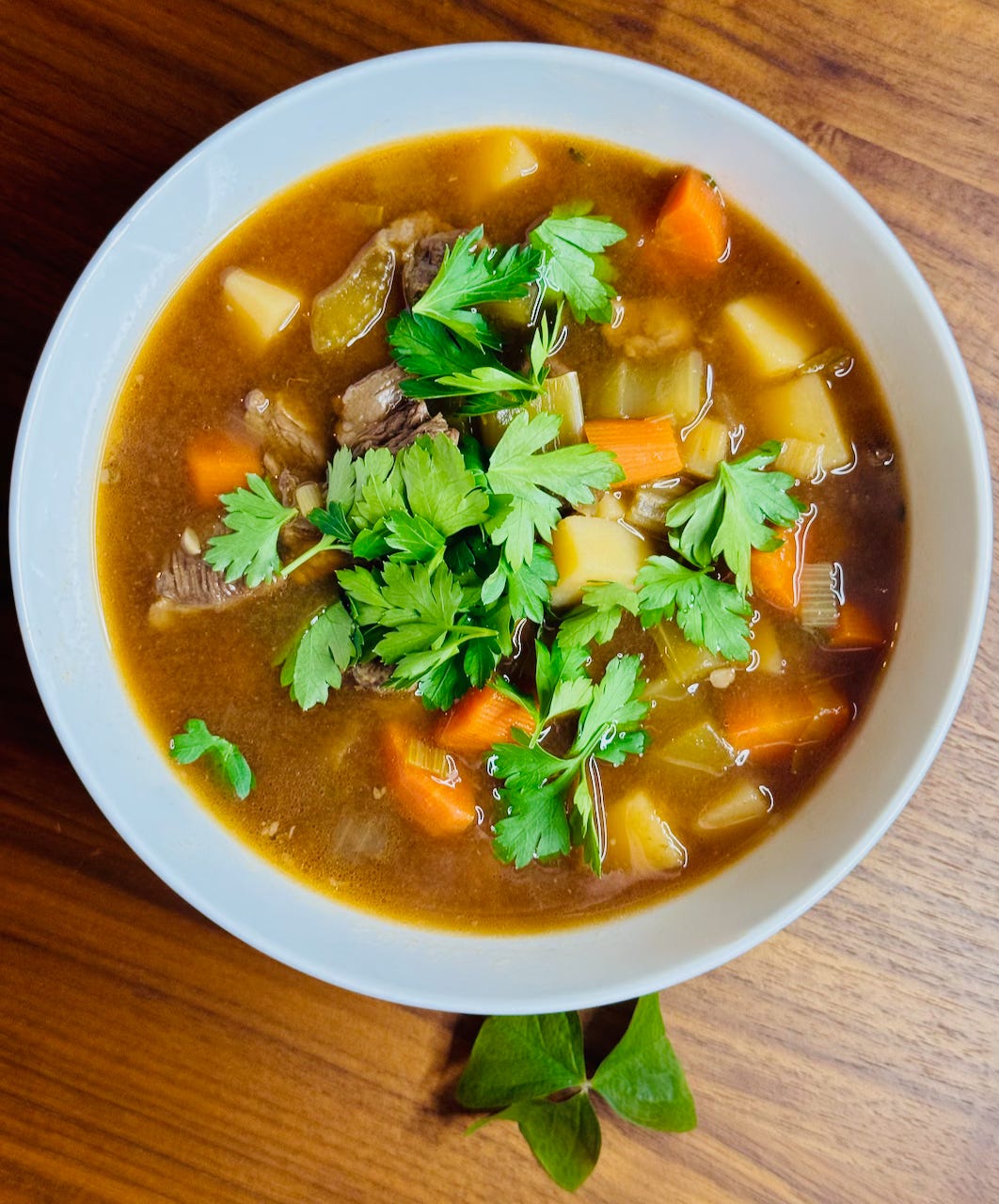
Irish Stew ☘️ Guinness
This Irish Stew honors the hearty spirit of traditional Irish cooking while taking a few liberties with history. Originally, it relied on mutton or lamb simmered with potatoes and little else. My version uses beef—a practical choice for modern American kitchens—while layering in deeper flavors with Guinness, fresh herbs, and rich beef bouillon.
The essence of the dish remains the same: a comforting one-pot meal that stretches simple ingredients into something deeply satisfying. In celebration of St. Patrick’s Day, this stew offers a taste of Irish tradition that’s more authentic than corned beef and cabbage (which, if you recall from a previous post, is an Irish-American creation).
Like many heritage recipes, Irish Stew has evolved over generations, adapting to the times and available ingredients. My version continues this tradition—respecting the dish’s humble origins while celebrating where we came from and where we are now.
The Basics
Prep Time: 45 minutes | Cook Time: 1 hour 15 minutes
Servings: 6-8 | Difficulty: Medium
Equipment
Large bowl for meat
Several small bowls for prepped vegetables
Ingredients
Vegetables
1 leek, white part only, thoroughly cleaned and chopped
1 yellow onion, chopped
2 garlic cloves, minced
3 celery ribs, chopped
3 carrots, peeled and chopped
2 large red potatoes, peeled and chopped
2 teaspoons fresh thyme, chopped
2 teaspoons fresh parsley, chopped
Meat
2 pounds chuck roast, partially frozen for easier cutting
Seasonings, Fats & Liquids
Kosher salt and black pepper
2 tablespoons olive oil
2 tablespoons unsalted butter
2 bay leaves
1/4 cup Worcestershire sauce
2 teaspoons Better Than Bouillon beef base
2 (32 oz) containers of beef stock
3 tablespoons tomato paste
1/2 bottle (5.5 oz) Guinness
Instructions
Prep Ingredients (Mise en Place)
Begin by preparing and organizing all ingredients before cooking.
Vegetables
Clean the leek thoroughly to remove sand; chop and set aside
Chop the onion into 1/2-inch pieces, and place in a bowl with water
Mince garlic, cover with a little oil to prevent drying out
Chop celery into 1/2-inch pieces
Peel and chop carrots into 1/2-inch pieces
Peel and chop potatoes into 1/2-inch pieces, and place them in a bowl with water to prevent browning
Chop fresh thyme and parsley, set aside
Meat
Keep the chuck roast partially frozen for easier cutting
Trim excess fat while preserving marbled
Cut into 1-inch pieces, pat dry with paper towels
Season generously with salt and pepper
Sear Meat
Heat olive oil in a Dutch oven over high heat
Sear beef in batches, browning all sides (avoid overcrowding the pan)
Remove browned meat and set aside
Build Flavor Base
In the same pot, add butter, leeks, and onions
Cook until soft and translucent
Add garlic during the last minute, stirring frequently
Make the Stew
Return browned meat to the pot
Add celery, carrots, herbs, bay leaves, Worcestershire sauce, bouillon, tomato paste, Guinness, and beef stock
Stir to combine
Bring to a gentle boil, then reduce to a simmer
Cover and cook for 30 minutes
Add Potatoes
After 30 minutes, add potatoes
Continue simmering for another 30 minutes, or until potatoes are fork-tender
Remove bay leaves
Taste and adjust seasonings as needed
Serve & Enjoy
Garnish with fresh thyme and chopped parsley
Serve with Irish soda bread, mashed potatoes, or buttered cabbage
A pint of Guinness makes the perfect pairing
Chef's Tips
Make Ahead for Best Flavor: This stew is even better the next day! Refrigerate overnight and reheat before serving.
Skim Fat Before Reheating: If refrigerating, skim off any solidified fat before warming up.
Traditional Irish Stew
Irish Stew dates back to the 1800s in Ireland, when the original version was much simpler - a humble peasant dish made with what was available.
Want to make it the old-fashioned way?
Use mutton or lamb instead of beef
Simplify to just meat, onion, and potatoes
Use water instead of broth and Guinness
Boil all ingredients together until tender

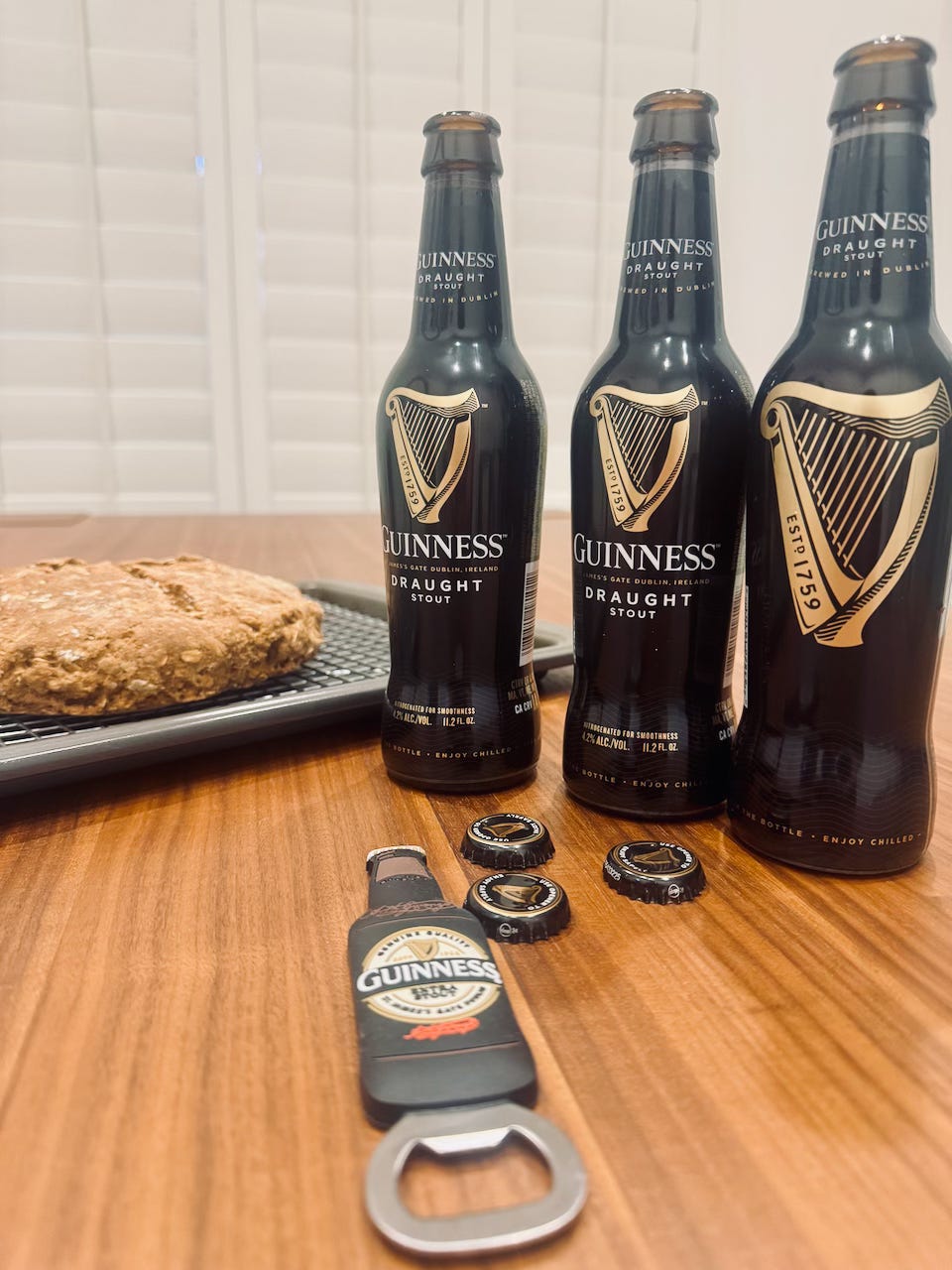
☘️ Guinness Draught Stout
Until I visited Ireland, I had no idea just how sacred the perfect Guinness pour was. You order a pint, and you wait—no rushing, no exceptions. The barman fills the glass about two-thirds full, then lets it settle before topping it off. If you grab it too soon, you not only miss out on the creamy head, but you’ll likely earn a disapproving look from behind the bar!
Once back home, without access to a proper Irish pub (or a barman with a practiced hand), I set out to replicate the experience as closely as possible. It’s not quite the same, but it comes close.
How to Pour Guinness Properly:
Start with a chilled glass
Tilt the glass at a 45-degree angle
Slowly pour against the side of the glass until it’s two-thirds full
Let it settle
Return the glass to an upright position and fill to the top
Let settle again for a couple of minutes
Raise your pint and enjoy!
Patience is key—the wait is always worth it.

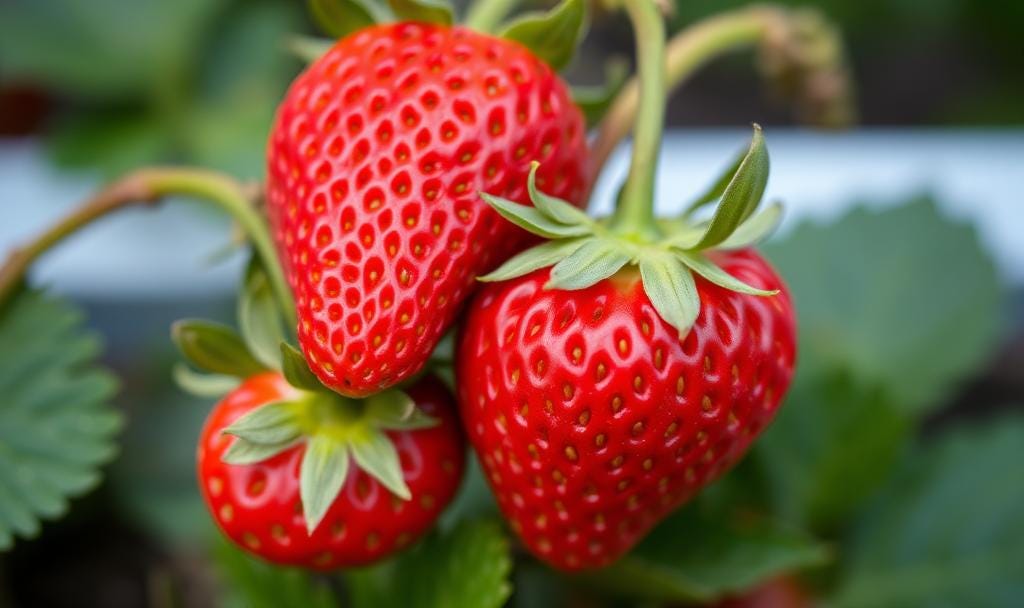
Helen Carnes' Strawberry Shortcake Dream
Next Sunday, we’re welcoming spring with Helen Carnes’ quick and delightful strawberry dessert—a nostalgic favorite that’s as effortless as it is delicious. Layers of angel food cake, vanilla pudding, ice cream, and fresh strawberries come together in a no-bake treat that feels like a sweet hug from Grandma’s kitchen. She always gave the best hugs!
This dessert brings back memories of visits to Mom Carnes’ house, where a homemade treat always greeted us at the door. Perfect for busy weeknights or last-minute guests, it’s just in time for peak strawberry season!


Do you have a favorite St. Patrick’s Day dish?
What’s your perfect Guinness pairing?
Share in the comments below!
Amd, as they say in Ireland…
"May the road rise up to meet you. May the wind be always at your back."
I wish you a wonderful St. Patrick’s Day! Sláinte!