

Helen Carnes' "Coffee Cake" & a World-Famous ☘️ Irish Coffee
A tender cinnamon-sugar bread, simple old-fashioned biscuits, and a taste of Irish Coffee history from San Francisco’s foggy Buena Vista Café


Pull up a chair at The Dinner Bell—where family recipes evolve, surprise, and bring history to life in today's kitchens.
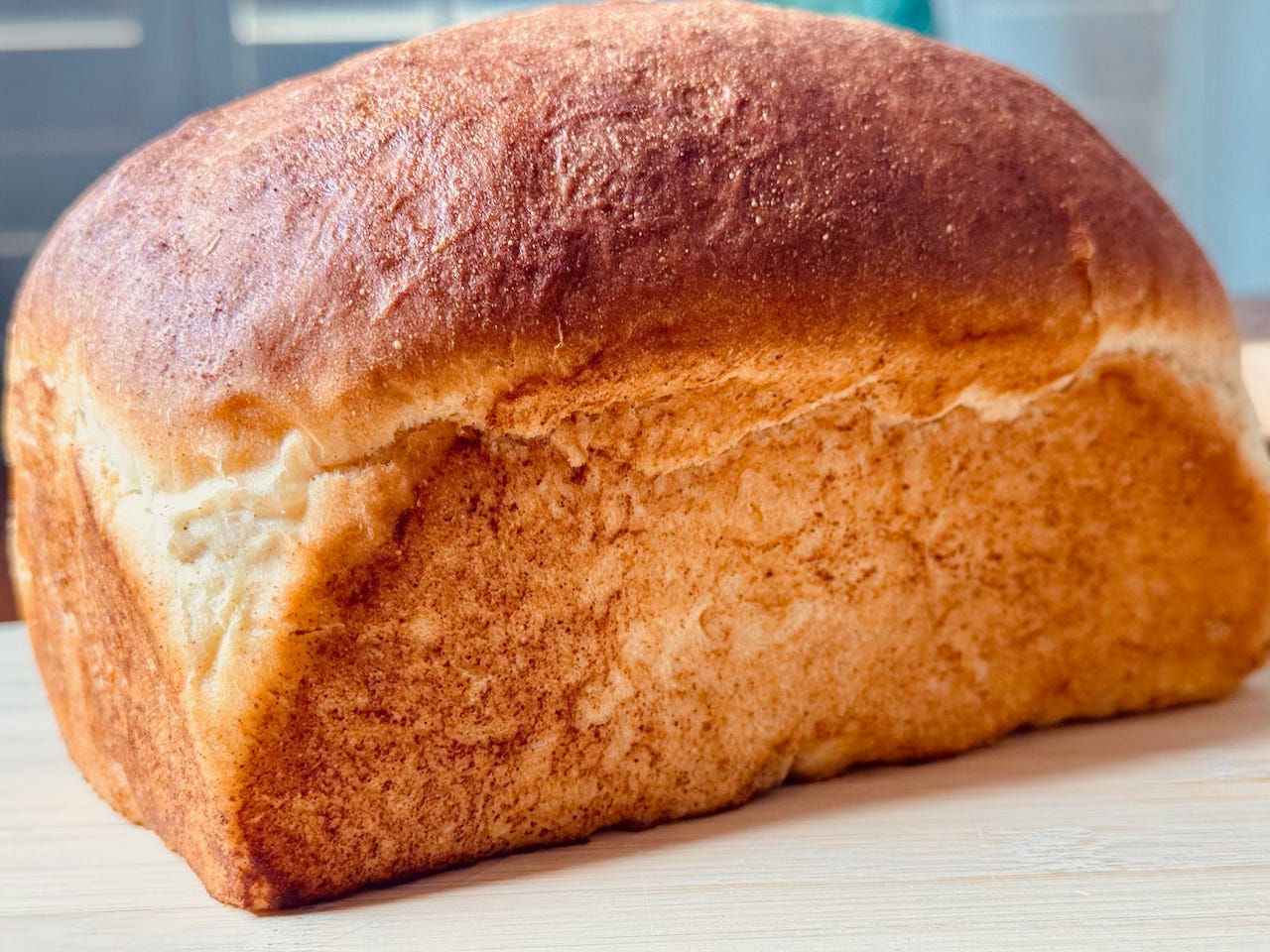
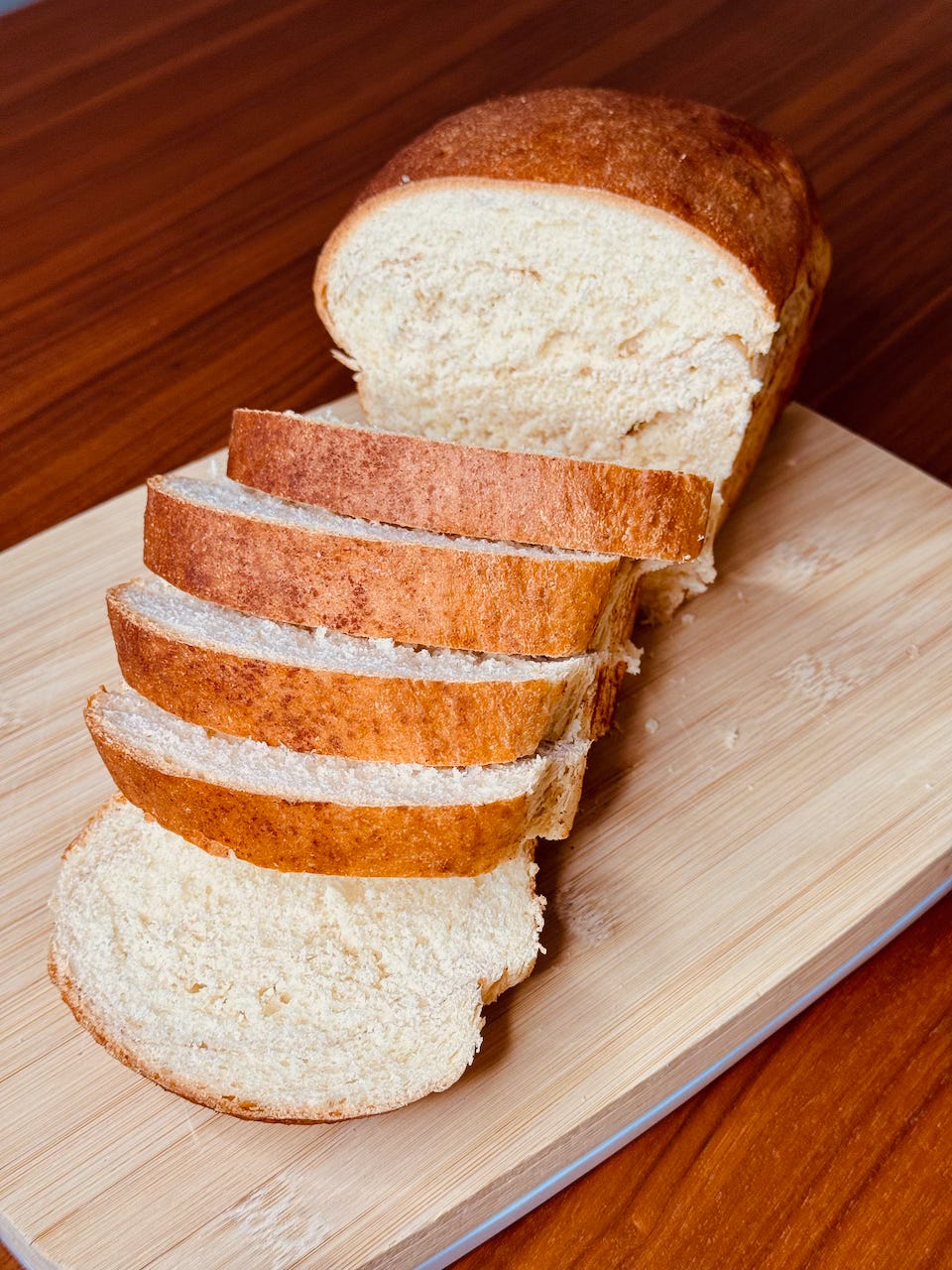
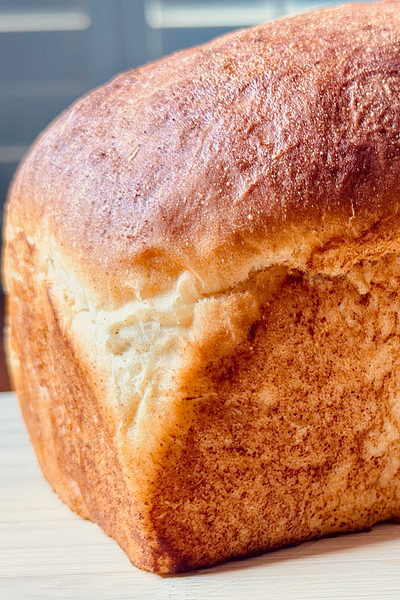
This week, I set out to make Great Grandma's Coffee Cake—but what emerged was something entirely different, yet just as delicious. Instead of a classic coffee cake, I found myself with a soft, cinnamon swirl bread—perfect on its own, even better toasted and paired with an Irish Coffee.
100 years ago, 'coffee cake' wasn't just cake—it was any morning treat meant to be enjoyed with coffee, whether bread, pastry, or cake. And this recipe holds more than one surprise—it delivers both a tender bread and old-fashioned biscuits.

A Dish Rooted in Gathering & Connection
Long before coffee shops, women gathered for what was essentially the original social hour—coffee, conversation, and something sweet from the kitchen. These gatherings weren't just about the food; they were a time to share stories, catch up on family news, and strengthen community ties.
This tradition is where our modern idea of 'coffee cake' comes from—less about the cake itself, more about the experience of sharing it with a cup of coffee and good company.
Helen Carnes' grandparents take us back to German and Austrian households and coffee salons, where 'coffee cake' wasn't a single recipe but rather any baked treat meant to be served with coffee. Cakes, breads, pastries, and biscuits—all fell under this category. It makes sense why Mom Carnes called this recipe 'coffee cake' even though it more closely resembles a sweet morning bread and savory biscuits.
These coffee gatherings, known as kaffeeklatsch, were a tradition brought to the U.S. by German immigrants, including Helen Carnes' ancestors from Bavaria and Prussia. Coffee klatches became a way for women—mothers, grandmothers, and friends—to connect in the afternoon, usually between lunch and dinner (before the dinner bell rang). And as the name suggests, there was plenty of 'klatsch' (chatter and gossip) to go around.
Whether you call it kaffeeklatsch, fika (as they do in Sweden), or simply a coffee break, these traditions remind us that food is about more than sustenance. It's about slowing down, sharing, and keeping the stories of the past alive—one slice at a time.
At first glance, this might sound like a tea party, and in many ways, it was. But in today's world, coffee culture has evolved beyond the home. With Starbucks and modern coffeehouses leading the way, coffee with sweets now draws men and women of all ages to gather, share, chat, and, yes, gossip—much like the kaffeeklatsches of the past.
Starbucks didn't invent the coffee break—they just found a way to turn an age-old tradition into a global phenomenon.

When life ebbs and flows, and you find yourself in a deep economic depression, you learn to create family recipes using what’s available and what’s affordable. Many of my grandparents’ recipes are simple, easy to make, yet still delicious and filling.
This ‘coffee cake’ recipe is one of those. It relies on the basics found in most pantries—or root cellars of the time—flour, sugar, milk/cream, salt, eggs, and water. My grandparents lived through the Great Depression—they had to make do. Kitchen tools were reduced to spoons, whisks, hands, and bowls. Stand mixers and dough hooks didn’t exist, and even if they had, they wouldn’t have been affordable.
The ingredients are similar to those used to make coffee cake. The main difference? The preparation and presentation. Traditional coffee cake often features a crumble topping, streusel, or a cinnamon swirl, while some versions have frosting or glaze.
This simple bread-and-biscuit recipe is a reminder that great food doesn’t require extravagant ingredients—just a little creativity and a connection to the past.
As we approach St. Patrick's Day, I couldn't help but wonder how Mom Carnes' creation might pair with a traditional Irish Coffee. The cinnamon-sugar-kissed, lightly toasted bread makes a perfect companion to the warmth of whiskey-laced coffee topped with cream. This pairing transforms a humble family recipe into something celebratory, honoring both my family's German coffee traditions and the Irish holiday just around the corner.

Mom Carnes’ “Coffee Cake”
This week’s recipe surprised me. Passed down as ‘coffee cake,’ it turned out to be something entirely different—a tender, yeast-raised cinnamon-sugar bread. And tucked within the same recipe? A biscuit variation that skips the cinnamon but keeps the comfort. Two heirloom treats, one family tradition.
Prep Time: 30 minutes + 4-6 hours rising time
Cook Time: 12-25 minutes (varies by option)
Servings: 10-12 | Difficulty: Medium
Temperature: 425°F/220°C (biscuits) or 375°F/190°C (bread)
Equipment
Plastic wrap or a clean kitchen towel (for covering dough while rising)
Pastry brush (for applying glaze or butter)
Kitchen scale (for those using gram measurements)
Ingredients
For the Dough:
100g (1/2 cup) sugar
18g (1 tbsp) salt
26g (2 tbsp) shortening
7g (1 package) active dry yeast
60ml (1/4 cup) lukewarm water
1g (1/4 tsp) sugar
100g (2 large) eggs
480g (4 cups) flour
480g (4 more cups) flour
For Coffee Cake Rolls:
115g (1/2 cup) butter, melted
For Coffee Cake Loaves:
115g (1/2 cup) butter, melted
60ml (1/4 cup) heavy cream
50g (1/4 cup) sugar
5g (2 tsp) ground cinnamon
Instructions
Prepare Base:
Pour 2 cups of boiling water over sugar, salt, and shortening, then cool to lukewarm
Dissolve yeast in lukewarm water with 1/4 tsp sugar, then set aside
Beat eggs and add to the sugar mixture, then add the yeast mixture and beat well
Add 4 cups (480g) of flour to the mixture and beat thoroughly
Place the remaining 4 cups (480g) of flour on a cutting board and knead the dough until all flour is incorporated and the dough is smooth, not sticky, or use the dough hook until all flour is incorporated and dough pulls away from the sides of the bowl
Place dough in a greased bowl, cover, and either refrigerate overnight or leave at room temperature, covered with a kitchen towel, to rise until doubled in size
Option 1: Biscuits
Roll the dough out onto a floured board to 1/2 inch thick
Cut with 2½-3 inch biscuit cutter (or glass)
Dip half in melted butter, fold over
Brush melted butter on top and place in a greased half-sheet baking pan
Let rise for 3 hours or until doubled in size
Bake at 425°F (220°C) for 12-15 minutes or until golden brown
Remove from the pan and cool on a wire rack
Option 2: Bread
Divide the dough into 3 equal parts
Place each portion into 3 greased 9x5-inch loaf pans. (Note: you can also make 1 loaf pan and 1 9x13 pan, but reduce baking time for the 9x13 pan as the dough will spread and cook faster)
After the dough has risen for 2 hours, punch it down, roll it out, brush it with butter and cream, then sprinkle with cinnamon sugar mixture
Roll the dough back up, brush the exterior with the same butter and sugar mixture
Cover and let rise for another 2 hours or until doubled in size
Bake at 375°F (190°C) for 20-25 minutes or until golden brown
Remove from pans immediately and cool on a wire rack
Once completely cool, wrap in foil (can be frozen for up to 3 months)
Serving Suggestions
Serve warm or toasted with butter and a sprinkle of cinnamon-sugar
Enjoy with a hot cup of coffee or a classic Buena Vista Irish Coffee (full recipe follows)
Substitutions
Gluten-Free Option:
Replace 960g (8 cups) flour with 960g gluten-free flour blend (such as King Arthur Gluten Free Flour 1-1)
Add 1 tbsp (9g) xanthan gum if your blend doesn't include it
Expect a slightly different texture; the dough will be stickier and may not rise as high
Dairy-Free Option:
Replace butter with plant-based butter (such as Miyoko’s)
Replace cream with full-fat coconut cream (the thick part from the top of a can of coconut milk)
For a less coconut-forward flavor, try oat cream
Sugar Alternatives:
Replace sugar with coconut sugar (1:1 ratio)
Or use monk fruit sweetener (typically use 2/3 the amount)
For a less sweet version, reduce sugar to 60g (1/4 cup) in the dough
Vegan Option:
Replace 2 large eggs with 100g (1/2 cup) unsweetened applesauce, such as 365 Organic Unsweetened by Whole Foods Market, or homemade: blend 4 peeled apples with 1/4 cup water and a pinch of cinnamon, until smooth.
Vegan dough may not rise as much; give it extra time
Smaller Batch:
Halve all ingredients for a smaller yield
The half recipe will make about 1.5 loaves or one sheet of rolls
Freeze unused dough for up to 1 month

☘️ The Buena Vista Cafe Irish Coffee
A classic pairing that awakens your senses, warms your heart, and makes for a wonderful morning or afternoon kaffeeklatsch or St. Patrick's Day tradition.
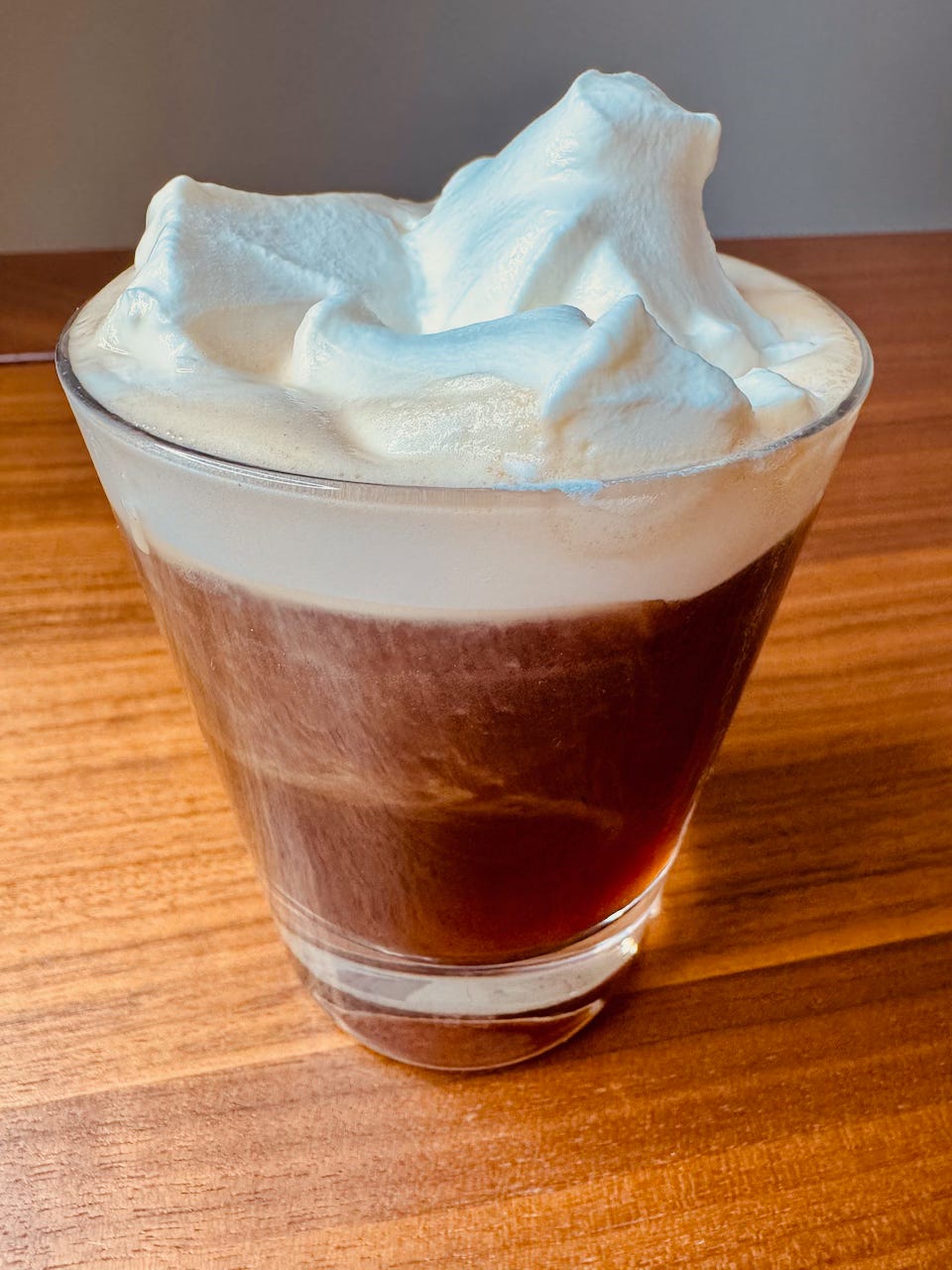
As you can see from my photo, I didn't have the perfect glass, nor did I flatten the cream with the back of my spoon—I like a lot of cream! I also used Jameson's because that's what I had on hand, and since I own a Nespresso machine, I made an Americano (hot water with a shot of espresso) to emulate the coffee. You can make your own version, follow The Buena Vista Cafe recipe to the tee, or visit in person!
Ingredients
6 oz. glass
Hot water
2 sugar cubes
Freshly brewed coffee (fill glass 3/4 full)
1 -2 ounces Tullamore Dew Irish Whiskey
Aged cream, stored in the fridge for 2 days, whipped, then poured over the top
Instructions
Fill the glass with hot water to warm it, then empty
Fill glass about 3/4 full with hot coffee
Add sugar cubes and stir until dissolved
Add the whiskey and stir gently
Using the back of a spoon, slowly pour the cream over the top to create a floating layer
Sip through the cold cream to get all the flavors—sugar, coffee, whiskey, and cream!

☘️ Irish Stew, Guinness & the Spirit of St. Patrick’s
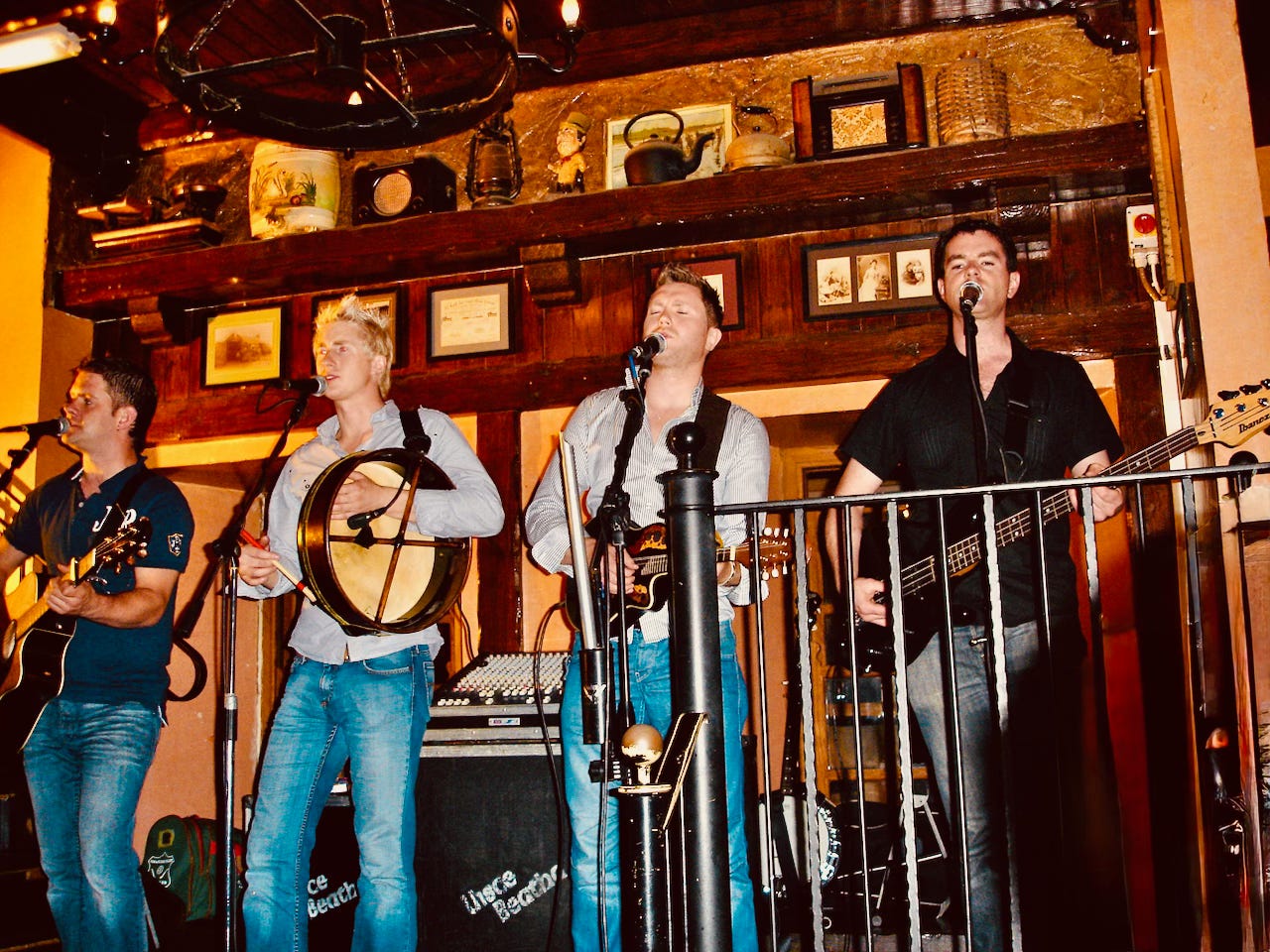
St. Patrick’s Day isn’t just about the meal—it’s about the music, the laughter, and the shared stories over a pint. Next Sunday, we’re celebrating the heart of Irish tradition—lively music, warm gatherings, and a rustic Irish Stew. Tender beef and root vegetables slow-simmered with herbs and stout create the perfect dish for St. Patrick’s festivities. Paired with a perfectly poured pint of Guinness and a nod to the communal spirit of an Irish pub, this meal brings Ireland home.

Have you ever recreated a family recipe only to have it turn out completely different from what you expected? Tell us about your kitchen surprises!
What’s your go-to coffee pairing? Ever tried an Irish Coffee? Share your favorite coffee + treat combo in the comments below!”
This was such an interesting read! And now I know why I love coffee “cake” so much. Really, any baked treat in the morning… or afternoon! Thank you for the info and inspiration, definitely going to try this recipe and invite some friends over for klatsch! ;)
My husband and I were lucky enough to taste the bread and Irish Coffee in Jennifer’s home. The bread was outstanding and the Irish coffee went so well with toasted bread