

Betty's Minestrone with a Sardinian Twist
Plus: Blue Zone Inspiration, Neighborhood Mahjong, and Archie's Veggie Verdict

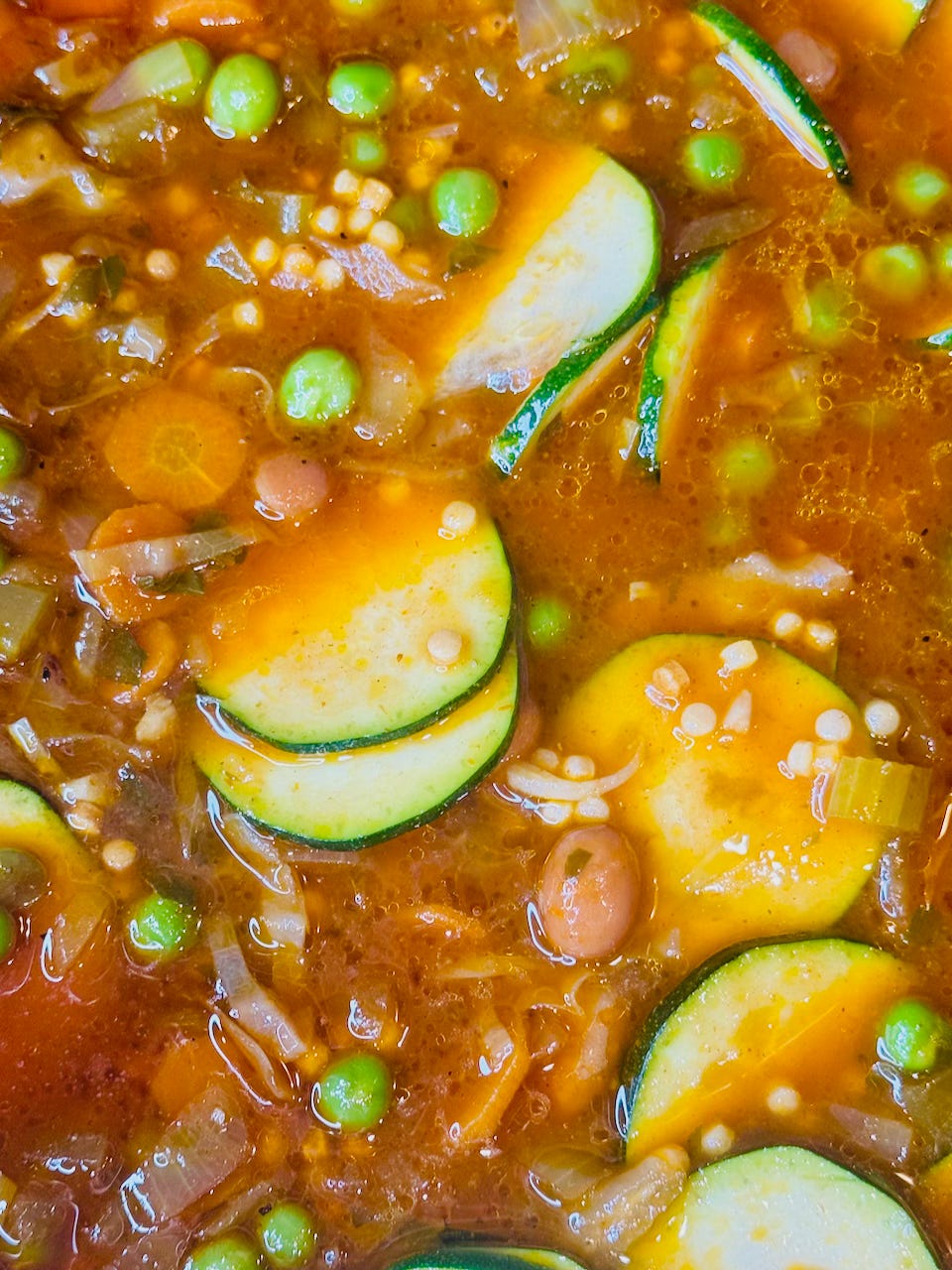
January brings cheerful pink carnations and a treasured recipe from Betty Croteau, a remarkable woman whose Huntington Beach kitchen was always filled with the aroma of simmering soup and the laughter of neighbors. Her Minestrone recipe unexpectedly connects us to the Blue Zones of Sardinia, where similar vegetable-rich soups have sustained generations. While Betty's version evolved from weekly gatherings where neighbors would drop by for soup and conversation, often lingering for afternoon Mahjong games, its roots echo the communal cooking traditions of Mediterranean villages.
The intersection of these cultural threads - from Betty's California kitchen to ancient Sardinian traditions - reminds us how food weaves together our stories. Just as Betty's neighbors found community around her soup pot, Sardinian families have gathered for centuries around their own versions of Minestrone, each bowl carrying the wisdom of generations.
Today's recipe bridges these worlds, honoring both Betty's welcoming spirit and the time-tested traditions of Sardinian longevity. It's a reminder that whether in a coastal California home or a Mediterranean village, good soup has always had a way of bringing people together.

This connection to Sardinian cooking traditions sparked my curiosity about authentic Blue Zone recipes. After watching the Blue Zone documentary, I was inspired to make traditional Sardinian Minestrone - a hearty combination of chickpeas, fava beans, lentils, potatoes, Swiss chard, fennel, and pumpkin. While authentic and sustaining (perfectly suited for their active lifestyle of fishing and farming), it was considerably heartier than Betty's version. Her adaptation, using just one type of bean, better suits our modern pace while honoring the original's spirit.
Perfect for winter nights, this satisfying soup stands confidently as a main dish, though it pairs beautifully with crusty bread and a simple green salad. While we may never know if the recipe came from Betty's ancestral family or was created in her California kitchen, its evolution over time tells its own story. The original recipe calls for beef broth - typical of recipes from 50 years ago, when vegetable broth was scarce in grocery stores. Today, you can easily swap in flavorful vegetable broth or bouillon for a fully plant-based version. Similarly, while the traditional macaroni makes this recipe not gluten-free, modern alternatives offer easy substitutions.
Speaking of pasta, I made one significant change to Betty’s recipe: replacing the elbow macaroni with Fregula Sarda Tostata Fine, an organic semolina pasta grown and milled in Italy. When I first tried this tiny pasta in the traditional Sardinian version, I was amazed by how it absorbed the surrounding flavors, adding an unexpected depth to each spoonful. Available on Amazon at a reasonable price, it’s a simple swap that elevates the entire dish.

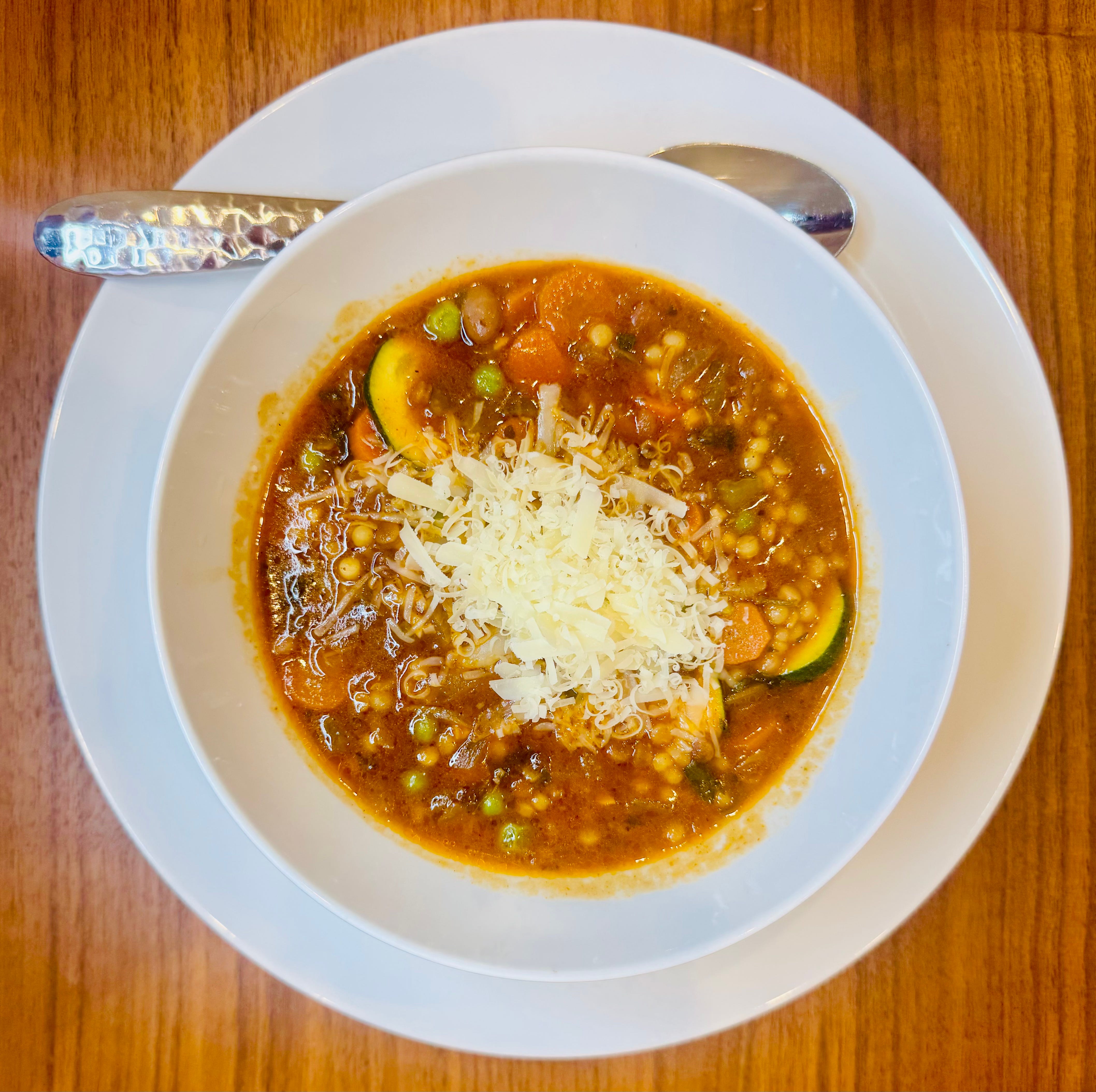
Betty's Minestrone with a Sardinian Twist
Betty says it best: “It’s even better the next day!”
Prep Time: 20 minutes
Cook Time: 1 hour 30 minutes
Servings: 8
Difficulty: Easy
Equipment
Dutch oven or large stockpot
Chef's knife and cutting board
Measuring cups and spoons
Mixing spoons and bowls
Can opener
Grater
Airtight container (for storage)
Ingredients
1/2 cup oil, olive or avocado
2 cloves garlic, minced
2 cups onion, chopped
1 cup celery, chopped
4 tablespoons fresh parsley, chopped
1 (6-oz.) can tomato paste
2 cups beef broth
9 cups of water
1 cup cabbage, coarsely chopped
2 carrots, peeled and thinly sliced
2 teaspoons salt
1/4 teaspoon pepper
1/8 teaspoon ground sage
1 (15-oz.) can kidney beans (chili beans)
1/2 zucchini, thinly sliced
1 cup peas
1 cup fregula (Sardinian pasta)
Grated Parmesan cheese (for topping)
Instructions
Heat the oil over medium heat in a large Dutch oven or stockpot. Add the onion, celery, garlic, and parsley. Cook until softened and fragrant, about 5 minutes
Stir in the tomato paste, followed by the broth, water, cabbage, carrots, salt, pepper, and sage. Mix well. Bring the mixture to a boil, then reduce the heat to low. Cover and let it simmer gently for 1 hour
Stir in the kidney beans, zucchini, peas, and fregola. Continue cooking for 20-30 minutes or until the pasta and vegetables are tender
Ladle the soup into bowls and serve piping hot, topped generously with grated Parmesan cheese


Base Options:
Substitute extra virgin olive oil or avocado oil for traditional oil
Add 2-3 additional garlic cloves for extra depth
Swap beef broth for rich vegetable broth or bouillon
Use fresh sage (double to 1/4 teaspoon)
Replace peas with green beans (add with cabbage if fresh)
Try different beans: cannellini, chickpeas, or borlotti (cranberry beans)
Topping Variations
Fresh grated Parmigiano-Reggiano
Fresh basil chiffonade
Red pepper flakes for heat
Crusty bread croutons
Make-Ahead Options
Cook entirely ahead - flavors improve overnight
Prep vegetables the day before
Store uncooked fregula separately
Reheat gently, adding water or broth if needed
Storage
Refrigerate for up to 5 days
Freeze without pasta for up to 3 months
Thaw overnight in the refrigerator
Store topping separately
Party Tips
Set up a toppings bar for guests
Serve in mugs for casual gatherings
Pair with small grilled cheese sandwiches
Keep warm in a slow cooker for parties
Drink Pairings
Italian reds: Chianti or Sangiovese
Full-bodied white: Verdicchio
Non-alcoholic: San Pellegrino with lemon
Food Pairings




While soup simmers on Betty Croteau's stove in 1970s Huntington Beach, a weekly ritual unfolds. Her kitchen table, cleared of cooking prep, transforms into a Mahjong battleground where neighborhood women gather, their conversation flowing as freely as the soup. These afternoon games weren't just about tiles and tactics - they were about building community in a rapidly growing beach town.
Huntington Beach of Betty's era was transforming from a sleepy surf town to a bustling suburb. As new families moved in, bringing their own traditions, Betty's kitchen became a melting pot of cultures and recipes. Her Minestrone, like her Mahjong gatherings, adapted to embrace this changing community.
Meanwhile, across the ocean in Sardinia's Blue Zone, similar scenes played out over centuries. Women gathered in home kitchens, preparing Minestrone with whatever their gardens offered. Their soup, heartier than Betty's version, reflected a farming lifestyle where sustenance and community were inseparable. Both versions, though separated by oceans and decades, share the same core truth: good soup builds strong communities.
The evolution of this recipe - from ancient Sardinian villages to Betty's California kitchen to our modern adaptations - mirrors how food traditions survive by adapting while keeping their heart intact.

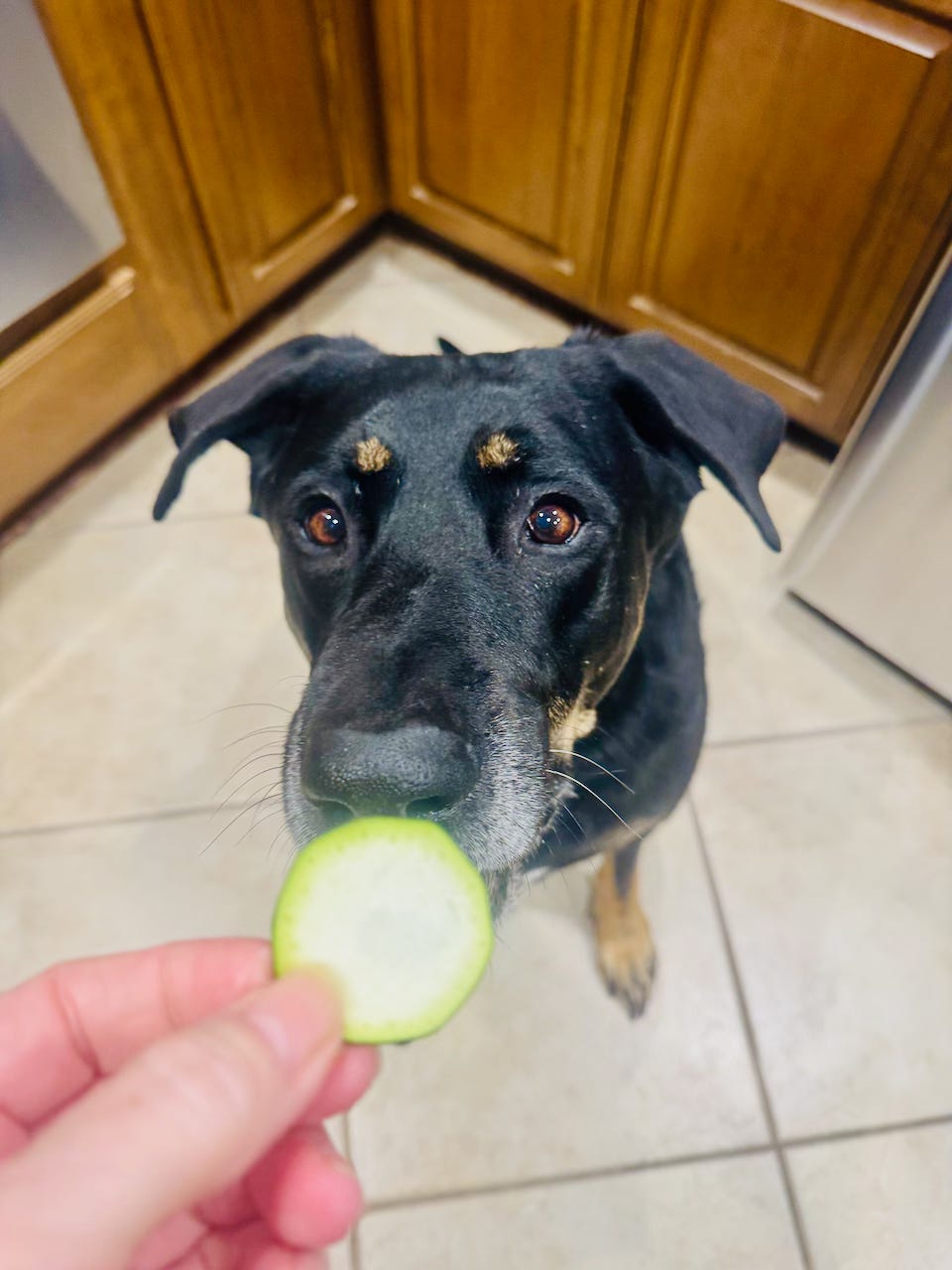
Turns out our quality control expert has refined taste! After carefully inspecting the zucchini (unlike his usual lettuce rejection), Archie gave his enthusiastic approval. Testing complete - cooking commenced.

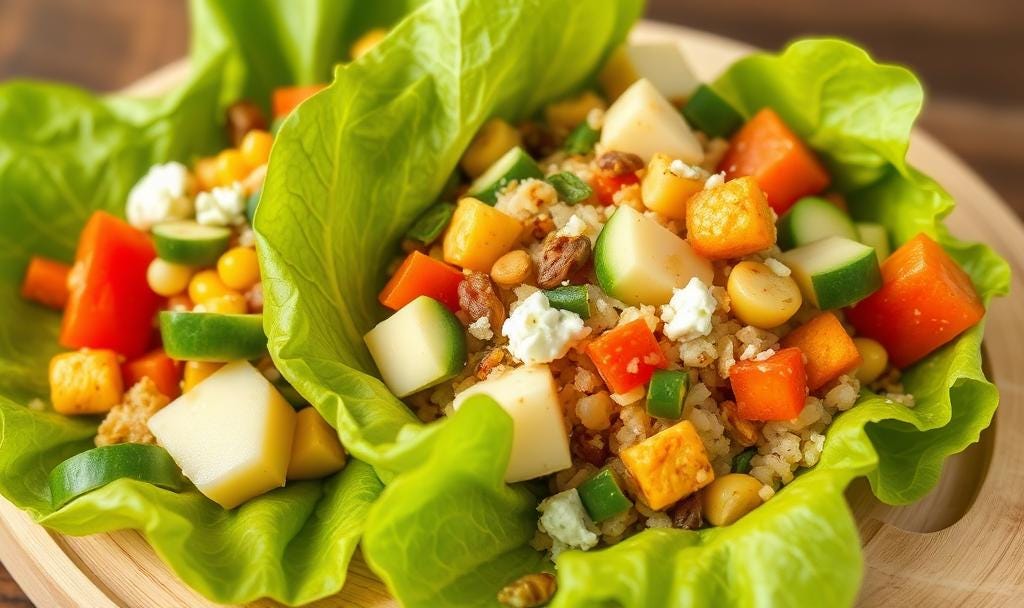
Coming next week: Olivia's California-fresh veggie wrap - a plant-based family favorite perfect for New Year's resolutions.

What family recipes would you like to see revived or reimagined? Share your recipe requests and family food memories in the comments below.

Love The Dinner Bell? Share it! Use the button below to spread the word - you'll get credit when friends subscribe through your unique link.
This brings back many memories from many years of good food and fun games of majong and wine. We ladies had so much fun of an afternoon. Leaving the kids home with their dads we played for hours
On The soup was very good I enjoyed it and it very healthy!
Loved the flavor of the Minestrone! Great recipe Jennifer. Look forward to next week recipe.