

Five-Generation Pan Haus. Ahem! What?
From 1820s Pennsylvania to modern kitchens, our German-American family's cherished breakfast tradition with shopping list and modern twists

This Sunday, I’m sharing our cherished five-generation family recipe for Pan Haus, a Pennsylvania Dutch dish, also known as Scrapple. Along with the full recipe and shopping list, I’ll explore how it became woven into our family traditions, share a Pennsylvania Dutch dictionary, recommend a documentary, and offer some modern twists on this classic comfort food.
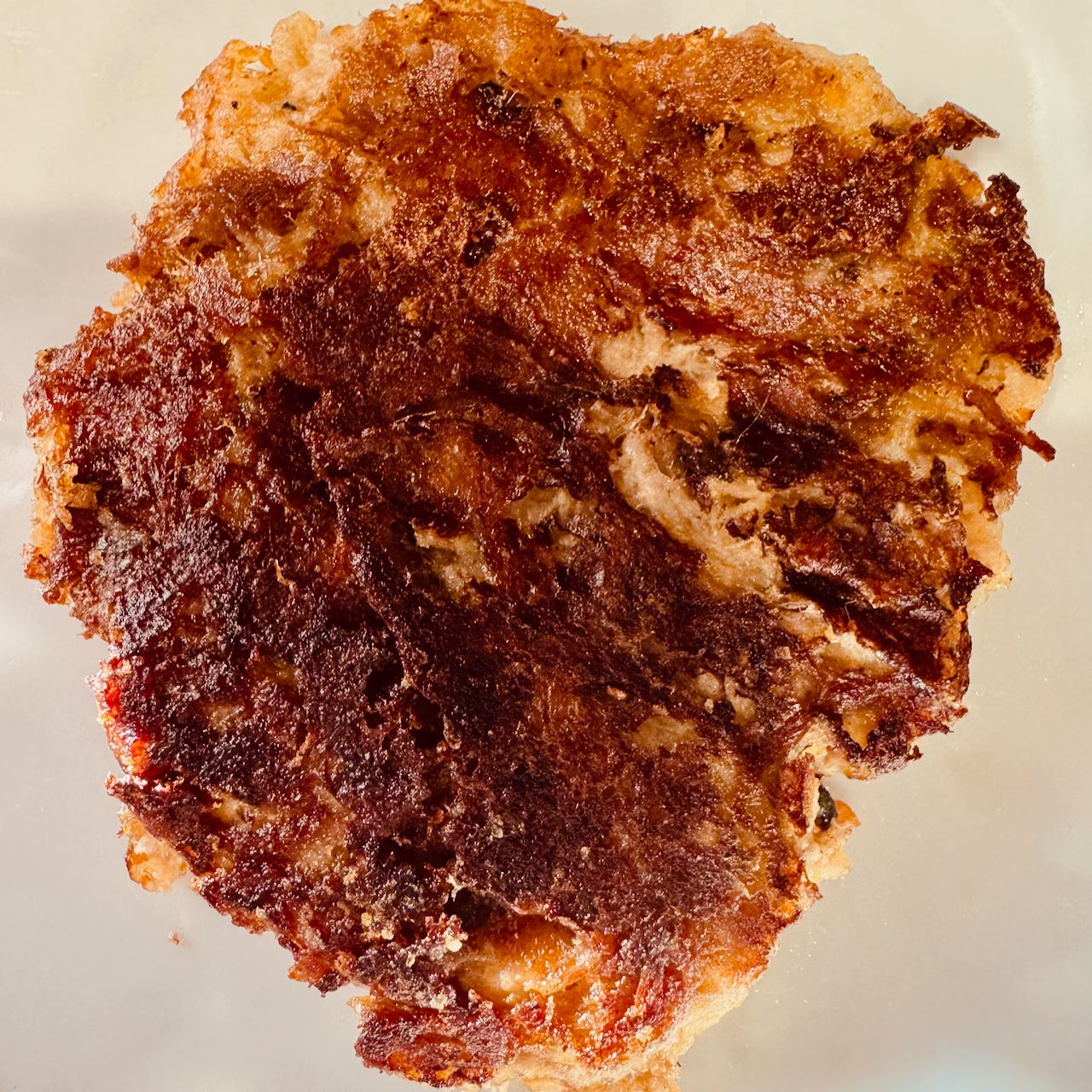
Pan Haus
Pan Haus is a savory dish made with pork, cornmeal, salt, and pepper. Also referred to as Scrapple, the dish can be made with wheat flour instead of cornmeal. Over time, various regional recipes have evolved, incorporating different ingredients and seasonings, such as sage, herbs and spices, onions, and even beef broth. The dish’s name is German, but it may have been influenced by Welsh rabbit.
Widely considered a traditional Pennsylvania Dutch dish, it traces its roots to German immigrants who settled in Pennsylvania. “Dutch” is actually a mispronunciation of “Deutsch” (German). As they moved westward, this dish became part of many family traditions.
Typically fried and enjoyed with eggs and bacon, it’s become our family Christmas breakfast tradition.
For more insights, explore the Pennsylvania Dutch Dictionary or watch the documentary Tastes of Evansville: Pon Haus, produced by the Feel the History class at F.J. Reitz High School in Evansville, Indiana.
Ready to experience our family traditions for yourself? Unlock the recipes, stories, and special holiday pricing—get 25% off an annual subscription for just $64/year. Subscribe today to gain access!


Five Generations of Tradition
Pan Haus, a dish made with humble ingredients, has become a symbol of our family’s history, a recipe passed down from mother to daughter, father to son, shaping the heart of family gatherings for generations.
1820s: The Beginning of a Legacy
Mary Kantner, 3rd great-grandmother, was born in Lancaster, Pennsylvania. She married Joseph Gehring, a man from Baden-Württemberg, Germany (then Prussia), and, drawn by the promise of farmland, the two settled in Germantown, Indiana. It’s thought that Joseph and Mary, a Pennsylvania Dutch family, brought this recipe to Indiana. Little did they know, this humble dish would become a treasured family tradition for generations to come.
1860s: A New Generation
Mary’s daughter, Alice Gehring, married Augustus Weidman, also of German descent, and they settled in Indiana. The dish was passed down, evolving over time as the Weidman family likely put their own spin on it, adapting it to the ever-changing flavors of the new world.
Clara Weidman Baker; Clara and Jesse’s home in Hagerstown, Indiana
1900s: The Tradition Grows
Clara Weidman married Jesse Baker and settled in Hagerstown, Indiana, where the Pan Haus tradition took firm root in their home and continued as a winter custom for their family. Later, John Baker and Mary Jane Carnes also carried on this tradition.
1940s and Beyond: Generations Carry the Flame
For more than 60 years, the Carnes/Baker family gathered over this dish, each meal linking them to past generations and the stories carried in every bite.
Today, the tradition continues in the Blair/Baker/Carnes/Nelson/Blanke families. Though times change, the recipe remains archived here for future generations to discover.
For over five generations, this “odd” dish, which seems simple but packs a punch, especially for those who love bacon, has endured.



Recipe Revival: Our Family’s Pan Haus Recipe
Makes 5 tins of German-Pennsylvania Dutch-Midwest goodness
Ingredients
6 pounds pork tenderloin
Water (enough to cover the meat) plus 4 cups
1 tablespoon kosher salt
1/2 tablespoon black pepper
8 Wyler’s chicken bouillon cubes
1 tablespoon roasted chicken Better Than Bouillon
32 ounces of chicken broth
4 cups cornmeal
Method
Place the pork loin in a large pot. Add the kosher salt, black pepper, 4 bouillon cubes, Better Than Bouillon, and chicken broth. Pour in enough water to cover the pork. Cover the pot with a lid.
Bring the mixture to a boil, which will take about 20-30 minutes. Once it reaches a boil, cover with a lid, reduce the heat, and simmer for 2-3 hours, or until tender and easily pulls apart.
Remove the pork from the pot and allow it to cool.
Transfer the broth to the refrigerator and let it cool for 2 hours, or overnight.
Once the pork is cool, shred it. If needed, refrigerate the pork overnight and allow it to warm to room temperature before shredding. This should take about 30 minutes.
Remove the broth from the refrigerator and skim the solidified fat off the top.
The following day, bring the broth to a boil. While it’s warming, whisk the water into the cornmeal.
Pour the cornmeal mixture into the pot, then add the pork and 4 bouillon cubes, stirring as you add them. Once the broth boils, reduce to a simmer.
Simmer for 2-3 hours, stirring every 30 minutes to prevent sticking. Some sticking is normal, so don’t worry. Cook until the mixture is just firm enough—not too firm or loose.
Ladle the mixture into the aluminum pans, then wrap them in aluminum foil.
Store one pan in the refrigerator and the others in the freezer until ready to use or gift.
When ready to fry, transfer a pan haus tin from the freezer to the fridge and thaw overnight.
The next morning, remove the pan haus from the tin and slice it into 1/4-inch-thick pieces.
Place the slices on paper towels to absorb excess moisture.
Heat a large cast-iron skillet over medium-high heat.
Add bacon grease, butter, or lard to the skillet and let it melt. Add the pan Haus slices.
Let the slices brown on one side for about 3 minutes before flipping. Be patient—flipping too soon may cause them to stick or fall apart.
Serve with eggs and bacon for breakfast.
Shopping List
8-quart stockpot
shredding claws or 2 Forks

Looking for more ways to enjoy this tradition? Here are some modern twists, schedule tips, and healthy swaps.
Tips
Split the work over two days to make it more manageable.
Halve the recipe to lighten the workload.
Cook the cornmeal, pork, and broth in under 30 minutes for a quicker meal.
Swaps
Pork → Seitan
Kosher salt → Coarse sea salt
Bouillon cubes → Chicken broth
Better Than Bouillon → Chicken broth
Chicken broth → Vegetable broth
Cornmeal → Polenta
Lard or bacon grease → Vegetable shortening
Options
Vrapple, made with Seitan

Icicle Pickle Update
It’s Day 11 of the Icicle Pickle Brining Project. They’re still a bit tangy, but the California version, in my opinion, is tastier than the original. I’ll give them another 4 days before making a final decision on the recipe. I’ll post an update in Chat on Thursday, Dec 19.

Leave a comment, show your love, or spread the joy with a gift subscription!
One of my favorites! Love learning more of the history of this delicious food!
This was a great memory for me I have been eating pan haus since I was a little girl and now an old woman of 82 I still enjoy it very much Not just the wonderful taste but the memories that come to me. Many times we would have it Christmas or holidays and family stories would be remembered as we would sit and enjoy this with eggs and bacon
It is a family tradition and I hope others will see it as a special family food carried down the generations